
Agentic AI security solutions control what autonomous AI agents can access and do across enterprise systems. Venice is best for task-scoped, just-in-time agent access, BeyondTrust for agent controls on endpoints, Zenity for agent posture and governance, and Prisma AIRS for AI runtime guardrails.
What Are Agentic AI Security Solutions?
Agentic AI security solutions protect autonomous artificial intelligence agents that plan, make decisions, use external tools, and execute workflows across enterprise environments. Unlike traditional Large Language Model (LLM) security, which focuses on what a model says, agentic security governs what an agent does, preventing risks like prompt injection, excessive permissions, non-human identity abuse, and intent drifts.
Why AI agents create security risks:
- Autonomous decision-making: Agents can execute complex workflows rapidly, amplifying the impact of manipulated or incorrect decisions.
- Tool, CLI, API, and MCP access: External integrations expand the attack surface and create opportunities for unauthorized actions and privilege escalation.
- Persistent memory and context: Memory poisoning and intent drift can influence agent behavior across tasks and sessions.
- Delegated credentials: Agents can misuse privileged access across connected systems, increasing the impact of compromised identities.
Types of agentic AI security solutions:
- Identity, access, and privilege controls: Enforce task-specific permissions, just-in-time access, and authorization for individual agent actions.
- AI agent discovery, posture, and governance: Identify agents, assess permissions and configurations, and manage security risks throughout their lifecycle.
- Runtime protection and guardrails: Monitor agent behavior, detect prompt injection and data leakage, and block unauthorized tool executions.
In this article:
- Agentic AI Security Solutions at a Glance
- Why AI Agents Create New Security Risks
- Types of Agentic AI Security Solutions
- Key Capabilities of Agentic AI Security Solutions
- Notable Agentic AI Security Solutions
Agentic AI Security Solutions at a Glance
The table below summarizes the key differences between the agentic AI security solutions covered in this guide. We explore each solution in more detail below.
Why AI Agents Create New Security Risks
Autonomous Planning and Decision-Making
AI agents can break complex objectives into smaller tasks, choose which tools to use, and adjust their actions based on intermediate results. This allows them to complete multi-step workflows with limited human involvement, but it also creates opportunities for attackers to influence their decisions. Through prompt injection or manipulated information, an attacker may redirect an agent toward unauthorized objectives while the agent continues executing what appears to be a legitimate task.
The speed and autonomy of AI agents can amplify the consequences of incorrect or malicious decisions. Unlike human operators, agents can execute hundreds of tool calls, modify multiple systems, and complete complex action sequences in seconds without pausing for human review.
For example, an agent responsible for cloud infrastructure optimization might rapidly modify configurations, delete resources, or change permissions based on inaccurate information. This creates a larger potential blast radius, as a single compromised decision can affect numerous interconnected systems before security teams can intervene.
Tool, API, and MCP Server Access
AI agents frequently rely on external tools, APIs, and MCP servers to retrieve information and perform operations across enterprise systems. These connections may provide access to databases, cloud services, code repositories, collaboration platforms, and administrative functions. Although these integrations make agents more useful, they also expand the attack surface by introducing additional dependencies, permissions, and potential entry points.
Attackers can exploit insecure tool configurations, compromised MCP servers, or malicious tool responses to manipulate agent behavior. For example, a poisoned tool response might instruct an agent to retrieve confidential files and send them to an unauthorized destination. Agents may also combine legitimate tool permissions in unexpected ways, performing actions that were never anticipated when access was originally granted. An agent with access to identity management APIs and cloud infrastructure tools might use those capabilities together to expand its permissions or gain access to additional resources.
This creates risks of self-elevation and privilege escalation, particularly when agents can modify their own roles, request additional permissions, or invoke tools that grant elevated access. Security controls must therefore evaluate individual tool calls, prevent unauthorized privilege changes, and enforce policies independently of the agent's reasoning.
Persistent Memory and Context
Many AI agents maintain persistent memory to retain user preferences, previous interactions, task progress, and information retrieved from external sources. This enables agents to operate across extended workflows and use historical context when making decisions. However, persistent memory introduces additional security risks because information stored during one interaction can influence decisions made during subsequent sessions.
One significant threat is memory poisoning, in which an attacker introduces malicious or misleading information into an agent's stored context. For example, an attacker could manipulate a retrieved document so an agent saves an unauthorized instruction as a trusted operational preference. The agent may then follow that instruction during future tasks, even after the original malicious content is no longer visible. In multi-user environments, inadequate memory isolation can also expose sensitive information between users or workflows.
Persistent context can also contribute to intent drift, where an agent's actions gradually diverge from the user's original objective as it incorporates new information, makes intermediate decisions, or follows instructions embedded in external content. For example, an agent initially tasked with troubleshooting a service outage might progressively expand its activities to changing security configurations or modifying unrelated infrastructure.
AI Agents as Non-Human Identities with Delegated Credentials
AI agents function as non-human identities when they authenticate to enterprise applications, request access to resources, or execute operations using assigned or delegated credentials. These credentials may include API keys, OAuth access tokens, service account credentials, and temporary cloud permissions. Unlike traditional service accounts that typically perform predefined operations, AI agents may dynamically select tools and actions, making their access requirements more difficult to predict and govern.
An agent's ability to rapidly execute actions across multiple connected systems increases the potential blast radius of compromised or misused credentials. Agents may also attempt to elevate their own permissions or use authorized access in ways that violate the original user's intent.
Organizations therefore need to treat AI agents as distinct, auditable identities rather than simply extensions of human accounts. This includes assigning unique agent identities, implementing scoped and short-lived credentials, and enforcing dynamic, intent-based authorization at the individual tool-call level. Access decisions should account for the agent's current task, requested action, resource sensitivity, and the human identity it represents.
Types of Agentic AI Security Solutions
Identity, Access, and Privilege Controls for AI Agents
Identity, access, and privilege management solutions secure AI agents by treating them as distinct non-human identities with their own permissions, credentials, and access requirements. These solutions determine which enterprise resources an agent can access, what actions it can perform, and whether its activities align with the original user's authorization and intent.
Unlike traditional identity management systems that rely primarily on static roles and permissions, agent-focused solutions can enforce dynamic, task-specific authorization at runtime. They support capabilities such as just-in-time access, zero standing privileges, credential isolation, and human approval for sensitive operations. By evaluating individual tool calls and preventing unauthorized privilege escalation, these solutions reduce the risk of agents misusing legitimate access or executing unintended actions.
AI Agent Discovery, Posture, and Governance Platforms
AI agent discovery, posture, and governance platforms help organizations identify, inventory, and assess autonomous agents operating across their environments. They provide centralized visibility into agents deployed through different frameworks, applications, and cloud services, including agents that may have been introduced without formal security approval.
These platforms analyze agent configurations, permissions, connected tools, and relationships with sensitive enterprise resources to identify security gaps and compliance risks. They also support continuous posture assessment, ownership tracking, access reviews, and lifecycle governance, helping security teams detect shadow AI agents, prioritize misconfigurations, and maintain consistent security policies as agent deployments expand.
Runtime Protection and Guardrails for AI Agents
Runtime protection and guardrail solutions monitor AI agents during execution to detect and prevent malicious, unsafe, or unauthorized behavior. They inspect interactions between agents, users, external data sources, APIs, and MCP servers to identify threats such as prompt injection, sensitive data leakage, malicious tool responses, and attempts to manipulate agent decisions.
These solutions apply security policies to agent inputs, outputs, and tool executions, enabling organizations to block suspicious actions before they affect connected systems. They may also use behavioral analysis to detect intent drift, abnormal execution patterns, and deviations from approved workflows. Continuous observability, automated containment, and detailed execution logs help security teams investigate incidents and maintain control over autonomous operations.
Key Capabilities of Agentic AI Security Solutions
Agentic AI security solutions help organizations discover, monitor, and control autonomous agents operating across enterprise environments. These solutions address risks associated with excessive permissions, unauthorized tool execution, compromised credentials, prompt injection, and agent behavior that deviates from authorized tasks.
Agentic AI security capabilities generally fall into three categories, each addressing a different aspect of agent security:
1. Identity, Access, and Privilege Controls for AI Agents
These solutions manage AI agents as distinct non-human identities and enforce access policies governing which resources, tools, and operations each agent can use. They extend traditional identity and privileged access management (PAM) capabilities to autonomous systems, emphasizing least privilege, dynamic authorization, and accountability.
Key capabilities include:
- Unique agent identities and ownership attribution: Assigning distinct identities to AI agents and linking them to the human users, applications, and tasks responsible for their creation and execution.
- Just-in-time (JIT) access and zero standing privilege: Granting temporary, task-specific permissions and automatically revoking access when the authorized operation or session ends.
- Intent-based authorization: Evaluating individual agent actions and tool calls against the original task, declared intent, resource sensitivity, and applicable security policies.
- Runtime privilege enforcement: Approving, denying, or escalating access requests in real time to prevent unauthorized operations, privilege escalation, and lateral movement.
- Credential isolation and secure delegation: Keeping privileged credentials outside the agent's direct control while securely providing authorized access to enterprise resources.
- Human-in-the-loop approval workflows: Requiring explicit human authorization for sensitive operations, high-risk privilege requests, or actions exceeding predefined security thresholds.
- Session monitoring and audit trails: Recording agent access requests, authorization decisions, tool executions, and resource interactions to support investigations and compliance requirements.
2. AI Agent Discovery, Posture, and Governance Platforms
These platforms provide centralized visibility into AI agents operating across enterprise environments, including agents created through approved development frameworks and those deployed without formal security oversight. They help security teams identify unmanaged agents, assess their security posture, and establish governance throughout the agent lifecycle.
Key capabilities include:
- Continuous AI agent discovery: Identifying deployed agents, agent frameworks, associated service identities, and connected MCP servers across supported enterprise environments.
- Agent inventory and ownership mapping: Maintaining a centralized inventory of agents, their owners, operational purposes, deployment environments, and connected resources.
- Permission and entitlement analysis: Identifying excessive privileges, unused permissions, standing access, and potentially dangerous combinations of agent capabilities.
- Agent security posture assessment: Evaluating configurations, authentication methods, credential exposure, tool permissions, and compliance with organizational security policies.
- Agent relationship and dependency mapping: Visualizing connections between agents, users, APIs, MCP servers, applications, and sensitive data sources.
- Lifecycle governance: Managing agent registration, approval, policy assignment, periodic access reviews, and decommissioning.
- Risk scoring and compliance reporting: Prioritizing agents based on privileges, exposure, behavior, and business criticality while generating evidence for security audits.
3. Runtime Protection and Guardrails for AI Agents
Runtime protection solutions monitor agent interactions and execution behavior to detect and prevent threats that emerge during autonomous workflows. Unlike posture management tools that primarily evaluate configurations and permissions, these solutions inspect inputs, outputs, tool interactions, and execution patterns as agents operate.
Key capabilities include:
- Prompt injection and instruction manipulation detection: Identifying malicious instructions embedded in user prompts, retrieved documents, tool responses, and other untrusted content.
- Tool and MCP interaction monitoring: Inspecting agent calls to external tools, APIs, and MCP servers for suspicious requests, malicious responses, and unauthorized operations.
- Behavioral anomaly and intent drift detection: Identifying unusual execution patterns or agent activities that diverge from the original user request or approved operational boundaries.
- Sensitive data leakage prevention: Detecting and blocking attempts to expose confidential information through prompts, generated responses, API calls, and external integrations.
- Input and output guardrails: Validating agent inputs and generated outputs against security policies, permitted content types, and data handling requirements.
- Automated threat containment: Blocking suspicious tool calls, terminating compromised sessions, or triggering security workflows when high-risk behavior is detected.
- Runtime observability and investigation: Collecting execution traces, tool-call histories, policy violations, and security events to support continuous monitoring and incident response.
Notable Agentic AI Security Solutions
How we selected these solutions: We shortlisted agentic AI security solutions based on AI agent discovery, identity and access controls for agents, runtime authorization and guardrails, MCP and tool-use governance, and audit capabilities.
Note: Our own solution, Venice.io, is versatile and provides a solution for each of the three types of agentic AI security. For this reason, we included ourselves in each category, describing the solution in the relevant context.
Identity, Access, and Privilege Controls for AI Agents
Venice for Identity, Access, and Privilege Controls

Best for: Just-in-time, task-scoped access for agents, NHIs, and humans
Strengths: Intent-based dynamic controls and least privilege elevation that control every agent call
Things to consider: Agentic Gateway is newer than its PAM features for human users
Venice is a privileged access management (PAM) platform that applies Zero Standing Privilege (ZSP) and Just-in-Time (JIT) access to human, machine, and AI agent identities. It covers cloud, SaaS, and on-premises environments. Its Agentic Gateway sits between AI agents and the resources they reach, and evaluates each call against the agent’s task.
Credentials are injected into the agent request and stay out of agent context and memory. Access is requested, granted for a specific task, and revoked when the task ends. Each action is tied to a named identity and to the human who created the agent. Key features for identity, access, and privilege controls:
- Agentic Gateway: Sits between every agent and every resource and evaluates each call against the task the agent declared. Agents do not receive direct access to credentials.
- Ephemeral, request-based access: Agents receive access only by request and only for the current task, which keeps them within policy and limits lateral movement. Access is revoked when the task ends.
- Runtime authorization and drift detection: Evaluates and decides on agent calls while they are in progress. Calls that fall outside the declared scope are blocked.
- Agent ownership at creation: Traces every agent to the human who built it and the task it was built for, so each action maps to an accountable owner.
- Contextual, dynamic policy-driven approvals: Policies decide whether access is granted automatically, sent for manual approval, or blocked, based on identity, task, and risk context.
- Privilege discovery and ZSP dashboard: Discovers standing privileges for every identity across the estate. A live dashboard shows risk and progress toward zero standing privilege, with KPIs and AI-generated insights.
- Session audit and Audit Center: Records every request, access grant, and session action against named identities. Reports are organized for investigations and audit sign-off.
- Lightweight deployment and legacy PAM migration: Runs without agents or proxies across hybrid environments. Venice analyzes existing vaults, shared accounts, and standing permissions and converts them into JIT access policies.
BeyondTrust AI Agent Security

Best for: Governing AI coding agents and assistants on employee endpoints
Strengths: Kernel-level control of agent credentials, files, commands, and MCP
Things to consider: Endpoint-focused; policy setup has a learning curve
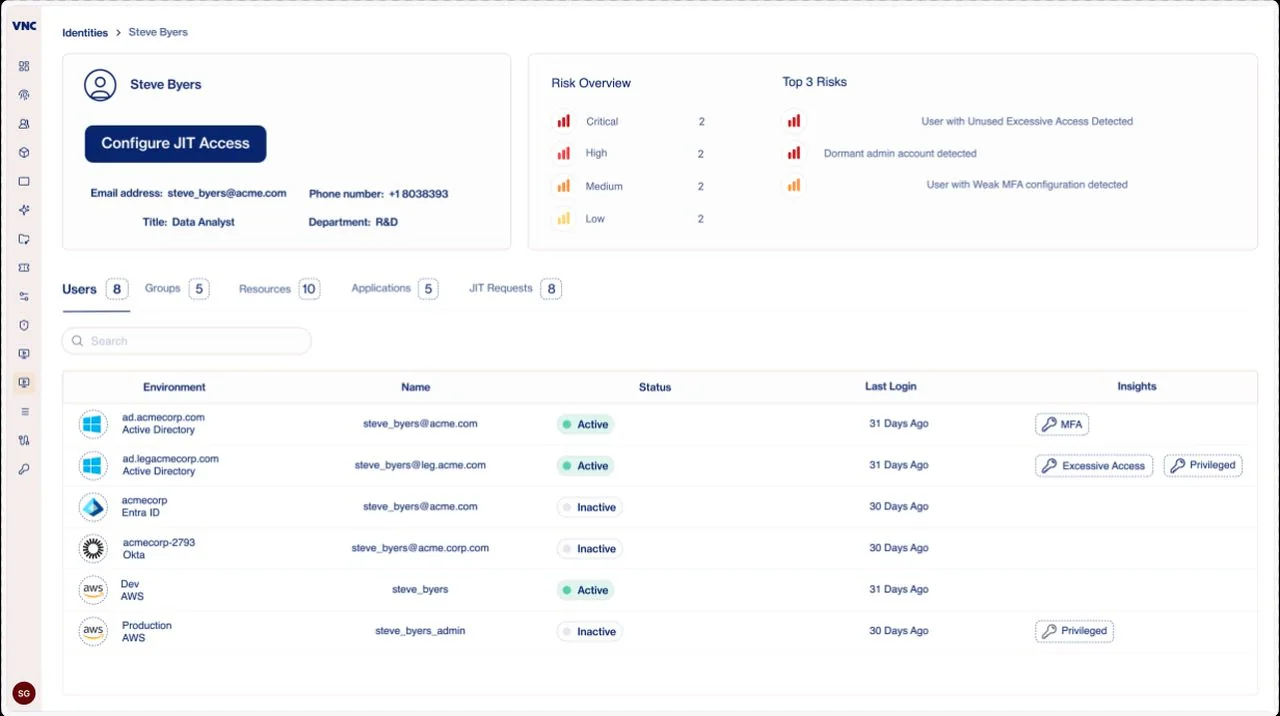
BeyondTrust AI Agent Security is part of the BeyondTrust Pathfinder Platform and builds on the company’s Endpoint Privilege Management product. It discovers AI agents running on endpoints, including shadow AI, sub-agents, skills, and MCP servers. It then attributes each action to either a human or an agent.
Policies are applied at the kernel, process, and network level and are evaluated before an action completes. The product restricts credential and file access, gates destructive commands, and controls MCP and API connections. It can also require human approval for high-risk actions across tools such as Claude Code, GitHub Copilot, and Cursor.
Key features include:
- Discovery and attribution: Identifies AI agents on every endpoint, including unsanctioned tools, skills, and MCP servers. Kernel-level visibility maps execution chains and records whether each action came from a human or an agent.
- Runtime privilege enforcement: Enforces least privilege across credentials and files, blocks destructive commands, and controls outbound MCP and API connections before the action completes.
- Human-in-the-loop approvals: Requires approval at high-risk points, including when agents run autonomously or when a tool’s native guardrails have been disabled.
- Session audit and policy simulation: Captures every agent session with per-action attribution. Teams can test a policy change against past activity before enforcing it.
- Prebuilt and custom policies: Provides policy templates from the Phantom Labs research team, which teams can modify in a policy builder.
- Vendor-agnostic coverage: Applies the same policies across Claude Code, GitHub Copilot, Cursor, internal models, and other agentic tools.
- Pathfinder Platform integration: Shares context with Endpoint Privilege Management and Identity Security Insights. Identity Security Insights maps escalation paths for human, non-human, and AI identities.
Limitations (as reported by users on G2):
- Learning curve: Users describe the platform as hard to learn. They say a cluttered interface makes it difficult to trace links between policies and endpoints.
- Time-consuming policy setup: Creating and tuning policies at the start takes time and often needs testing to understand how rules interact.
- Integration effort: Reviewers report difficulty using the API and third-party integrations to automate tasks such as approving just-in-time requests.
- Endpoint performance: Some users report slower applications or higher CPU usage on machines running the agent.
- Reporting interface: The reporting area is described as slow and awkward compared to other parts of the console.
Source: BeyondTrust
Okta for AI Agents

Best for: Organizations standardizing AI agent identity on the Okta platform
Strengths: Agent identities, short-lived tokens, and tool-level authorization
Things to consider: Policy setup can be complex; licensing costs can be high
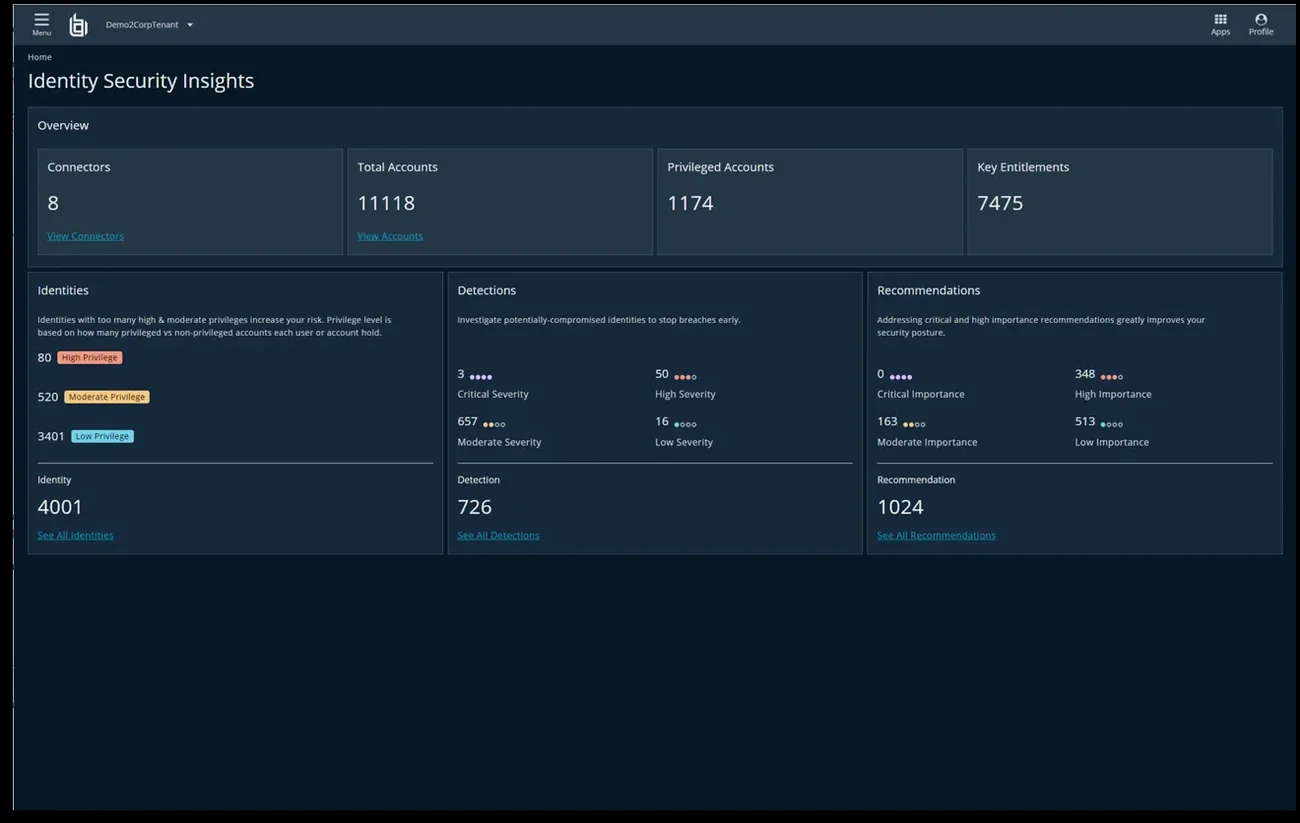
Okta for AI Agents extends the Okta identity platform to AI agents by registering each agent as an identity with a named human owner. It is organized around four questions: where agents are, what they can do, what they are doing, and how to respond when something goes wrong.
The product uses Cross App Access (XAA), an open standard built on an MCP authorization extension, to issue short-lived, scoped tokens in place of static API keys. An Agent Gateway verifies agents, brokers credentials at runtime, and logs each tool call without changes to agent or tool code.
Key features include:
- Agent discovery: Identity Security Posture Management scans environments for shadow AI agents and their connections, and builds an inventory of discovered agents.
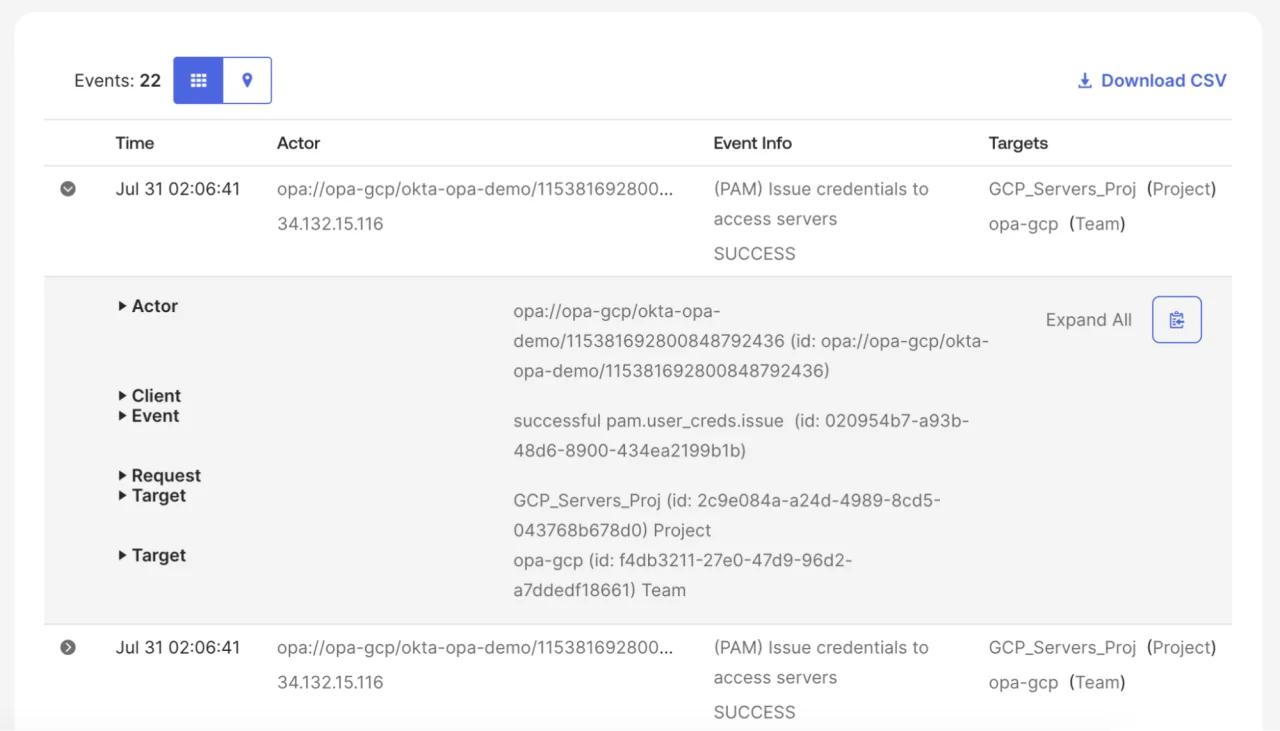
- Agent as principal: Gives every agent its own identity. Actions can be traced whether the agent acts on a user’s behalf or runs unsupervised.
- Agent SSO and Cross App Access: Registers agents through Agent Single Sign-On and replaces long-lived credentials with short-lived tokens for app-to-app and agent-to-agent delegation. Agents cannot access resources the delegating user is not authorized to see.
- Agent Gateway: Enforces policy at every tool call. It brokers credentials at runtime and logs each call without code changes.
- Fine-Grained Authorization: Uses relationship-based access control (ReBAC) to evaluate permissions at the level of individual tool calls.
- Governance and containment: Brings agents into access certifications and streams access decisions to a SIEM. A kill switch revokes access when an agent deviates from its baseline.
Limitations (as reported by users on G2):
- Complex setup: Users report that initial setup and policy configuration take significant effort, especially for advanced policies.
- Cost: Reviewers describe licensing as expensive, particularly when multiple features or add-ons are needed.
- Authentication friction: Users cite frequent sign-in prompts and occasional lockouts.
- Single point of dependency: An outage, MFA delay, or sync issue can block access to many applications at once.
Source: Okta
Aembit

Best for: Secretless access for agents and workloads to APIs and MCP servers
Strengths: Blended agent-user identity, MCP gateway, and one-click kill switch
Things to consider: Requires deploying Edge components in each environment
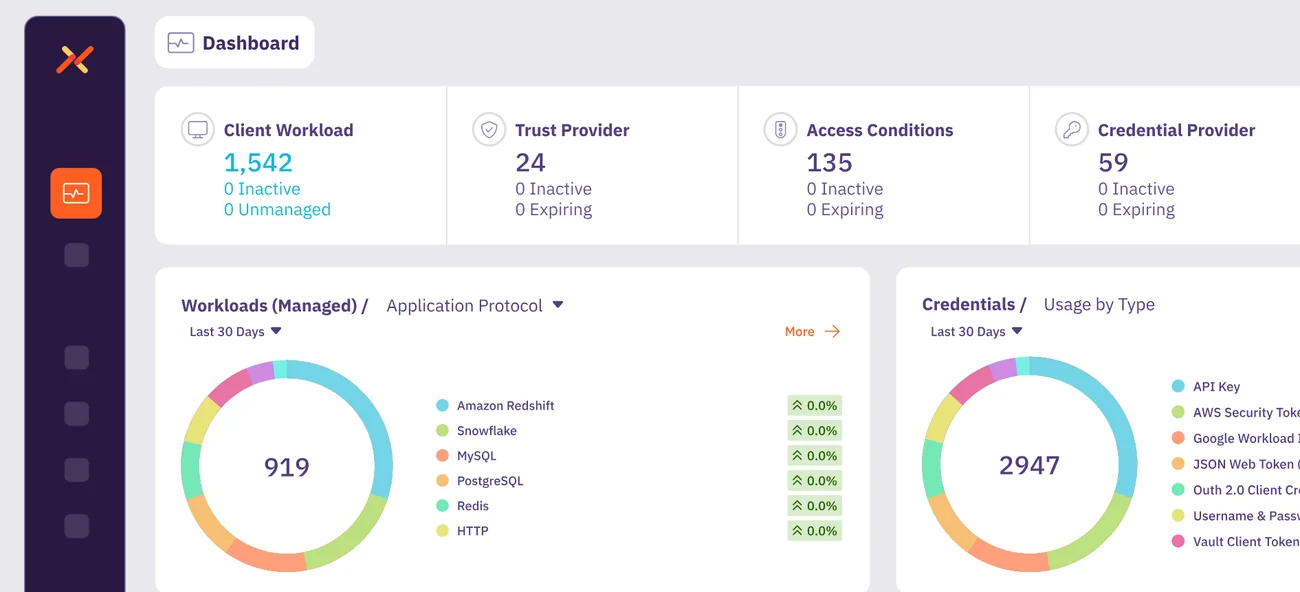
Aembit is an identity and access management platform for AI agents and non-human workloads. For each request, it verifies the agent’s identity and evaluates access policy and runtime context. It then obtains or issues short-lived credentials, so the agent never stores a long-lived secret.
The same control plane covers workforce, autonomous, B2B, consumer, and endpoint agents, along with workloads such as Kubernetes and CI/CD pipelines. Aembit builds on standards including OIDC, OAuth 2.1, SPIFFE, and XAA. It also integrates with security tools such as CrowdStrike and Wiz.
Key features include:
- Blended identity: Evaluates the agent and the user it acts for in a single access decision, so logs show which agent acted and on whose behalf. Autonomous agents get an independently attested identity.
- MCP Identity Gateway: Applies OAuth 2.1 authorization, policy enforcement, token exchange, and credential isolation to traffic between agents and MCP servers. This includes personal agents that employees connect to work resources.
- Tool filtering and fine-grained authorization: Allows or blocks individual tools. The same agent can receive different access depending on the user and the task.
- Just-in-time, secretless credentials: Delivers short-lived, scoped credentials per request, with no stored, bootstrap, or shared secrets.
- Conditional access: Factors security posture, geography, and time windows into each access decision.
- AI kill switch: Revokes an agent’s access in one click without affecting the associated user’s sessions or permissions.
- Attributed audit trail: Logs every access decision against a single verified identity, separating agent activity from human activity.
Limitations (based on publicly available sources):
- Edge components to deploy: Enforcement depends on Aembit Edge components such as Agent Controller and Agent Proxy, which must be installed in each environment. Aembit recommends placing them on separate VMs.
- Serverless overhead: In AWS Lambda containers, Agent Proxy startup and shutdown can add several seconds to function execution time. Only certain protocols are supported in Lambda environments.
- Beta deployment options: The virtual appliance deployment model is a limited beta and supports only the time-based access condition.
Source: Aembit
AI Agent Discovery, Posture, and Governance Platforms
Venice for AI Agent Discovery, Posture, and Governance
Best for: Discovering privileged AI identities, mapping ownership, and governing agent access
Strengths: Unified identity discovery, privilege visibility, agent ownership, and audit trails
Things to consider: Focuses on identity and access governance rather than comprehensive AI model posture assessments
Venice provides identity-centric discovery and governance for AI agents, non-human identities (NHIs), and human users. Its privileged access management platform discovers identities and standing privileges across cloud, SaaS, and on-premises environments, helping security teams identify excessive permissions and potential access risks.
For AI agents, Venice connects each agent to a named human owner and a declared task, providing accountability throughout its lifecycle. Its Agentic Gateway governs agent access, while its Zero Standing Privilege dashboard and Audit Center provide visibility into privileges, authorization decisions, and recorded activities.
Key features for AI agent discovery, posture, and governance:
- AI agent and privileged identity discovery: Discovers AI agents and privileged identities, providing visibility into the identities operating across enterprise environments and the permissions associated with them.
- Agent ownership and accountability: Associates agents with the humans responsible for creating or launching them and their declared tasks, enabling organizations to establish clear ownership.
- Privilege posture assessment: Identifies standing privileges and unnecessary access across identities, helping teams prioritize excessive permissions and reduce potential exposure.
- Zero Standing Privilege dashboard: Provides a centralized view of standing access, privilege risks, and progress toward eliminating persistent permissions, supported by KPIs and AI-generated insights.
- Unified identity governance: Manages human users, NHIs, and AI agents through a shared policy engine, risk model, and audit framework rather than separate governance systems.
- Task-based access governance: Defines which resources agents can access based on their assigned tasks, ensuring permissions reflect business requirements rather than inherited standing access.
- Continuous access visibility: Tracks access requests, authorization decisions, and agent sessions, helping security teams understand how privileged identities interact with enterprise resources.
- Audit Center and compliance reporting: Consolidates access decisions and session records into an auditable history, connecting agent activities to named identities for investigations and compliance reviews.
Limitations (based on publicly available sources):
- Identity-focused posture management: Venice primarily assesses identity, privilege, and access risks rather than broader AI security posture factors such as model vulnerabilities, prompt configurations, or training datasets.
Zenity

Best for: Governing agents across SaaS, cloud, and endpoint platforms
Strengths: Agent inventory, posture checks, and step-level runtime detection
Things to consider: Inline prevention depth varies by agent platform
Zenity is a security and governance platform for AI agents in three kinds of environments. These are SaaS platforms such as Salesforce Agentforce and Copilot Studio, cloud platforms such as AWS Bedrock, Azure AI Foundry, and Google Vertex AI, and employee devices. The platform is organized into three layers: Surface, Enforce, and Protect.
Surface inventories agents, checks their configuration and permissions, and validates which attack paths are exploitable. Enforce evaluates agent actions at runtime and lets them through, blocks them, or shuts the agent down. Protect monitors execution step by step and reconstructs decision chains for investigation.
Key features include:
- AI Observability: Builds a live inventory of agents across SaaS, custom, and endpoint deployments, and tracks the data each one touches.
- AI Security Posture Management (AISPM): Evaluates agent configuration and IAM permissions against policy before deployment.
- AI Exposure Management: Validates which agent access paths are exploitable and scores them. It produces a fix that can be applied in Runtime Boundaries.
- Runtime Boundaries: Evaluates each agent action in real time and lets it through, blocks it, or shuts the agent down.
- Agentic Identity: Correlates enforcement with the agent’s actual credentials to catch deactivated or over-scoped roles.
- AI Detection and Response (AIDR): Monitors agent execution step by step, maps activity to OWASP and MITRE ATLAS, and blocks unsafe actions. Guardian Agents turn findings from investigations into new rules.
- MCP security and compliance reporting: Covers MCP servers and tools, and produces reports mapped to OWASP and MITRE ATLAS.
Limitations (based on publicly available sources):
- Prevention varies by platform: Inline prevention is generally available for Copilot Studio, while Microsoft Foundry support was introduced as a preview.
- Integration-specific scope: In Copilot Studio, the integration monitors and blocks tool execution. Setup requires a Microsoft Entra app registration and admin configuration in Power Platform.
- Reporting flexibility: A reviewer on Gartner Peer Insights noted that reporting needs more options for segmenting data and applying labels.
Noma Security

Best for: One control plane for agents across SaaS, cloud, and endpoints
Strengths: Session-aware runtime controls plus tool-level agent access policies
Things to consider: Several agent capabilities launched recently, in 2026
Noma Security is an agent security and governance platform for agents on SaaS platforms, agents built in the cloud, and agents on employee endpoints. It combines AI security posture management (AI-SPM), AI detection and response (AI-DR), agent access control, and AI red teaming.
Noma evaluates each agent action against the full session: who the agent acts for, what data it can reach, and how it normally behaves. Depending on policy, it can stop an action, steer the agent, alert a human, mask data, or trigger a kill switch. Its Open Enforcement model applies one policy across the control points an organization already runs.
Key features include:
- AI-SPM and discovery: Finds every agent, MCP server, skill, and tool, and surfaces supply chain risks and misconfigurations.
- Agent Access Control: Approves, reviews, or blocks agents, MCP servers, and skills. It scopes actions by user, team, or tool sensitivity.
- AI-DR runtime protection: Weighs each action against session context. It can stop destructive actions, steer the agent, alert a human, mask data, or trigger a kill switch.
- Contextual detection: Identifies when individually legitimate actions combine into risky behavior.
- MCP security: Secures MCP servers, tools, and connections.
- AI red teaming: Runs multi-turn attacks against AI applications to find weaknesses before attackers do.
- Coverage across environments: Applies the same controls to SaaS, cloud, and endpoint agents.
Limitations (based on publicly available sources):
- Recent capabilities: Agent Access Control launched in June 2026 and endpoint coverage expanded in September 2026, so parts of the platform are relatively new.
- Uneven feature rollout: Agent Boundaries, which enforce business-defined limits on agent actions, were announced as planned for endpoints rather than available.
- Limited independent reviews: Gartner Peer Insights lists no user reviews for the platform yet.
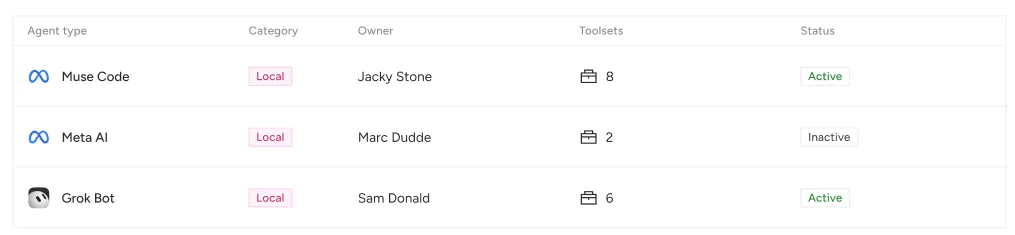
Source: Noma Security
Reco

Best for: Finding and governing AI agents connected across SaaS apps
Strengths: Graph mapping agents, apps, identities, and permissions
Things to consider: Visibility depth varies by app; alerts need tuning
Reco is an agent ecosystem security platform built on the Reco Graph. The graph maps applications, identities, permissions, and connections across an organization’s third-party SaaS environment. Reco discovers agents that arrive inside existing apps, such as Copilot in Microsoft 365 or agents in Salesforce and Slack, as well as agents employees connect themselves.
The platform is organized into Agent Governance, Agent Security, and Agent Runtime. It supports 18 agent platforms, more than 290 app integrations, and more than 1,000 detection controls. New integrations are added through Reco Factory.
Key features include:
- Agent Governance: Shows one live map of agents, apps, and the connections between them across the third-party ecosystem.
- Agent Security: Scopes permissions, revokes stale access, and assigns each agent an owner and a lifecycle based on the Reco Graph.
- Agent Runtime: Monitors prompts, actions, and events in real time and responds to threats.
- Shadow agent discovery: Detects unauthorized AI tools and agents, including those connected without security review.
- Identity and access governance: Controls who can access what across SaaS applications.
- Identity threat detection and response: Detects identity threats across connected apps.
- Data exposure management and Reco Factory: Finds and reduces sensitive data exposure. Reco Factory builds integrations for new apps in hours.
Limitations (as reported by users on G2):
- Varying connector depth: Visibility and remediation depth depends on the target application. Apps with limited or non-standard APIs receive less granular coverage.
- Alert tuning: Users report that the platform needs careful tuning to avoid excessive or inaccurate alerts.
- Limited customization: Reviewers ask for more flexibility in alerts, dashboards, and reporting, and for more documentation on advanced configurations.
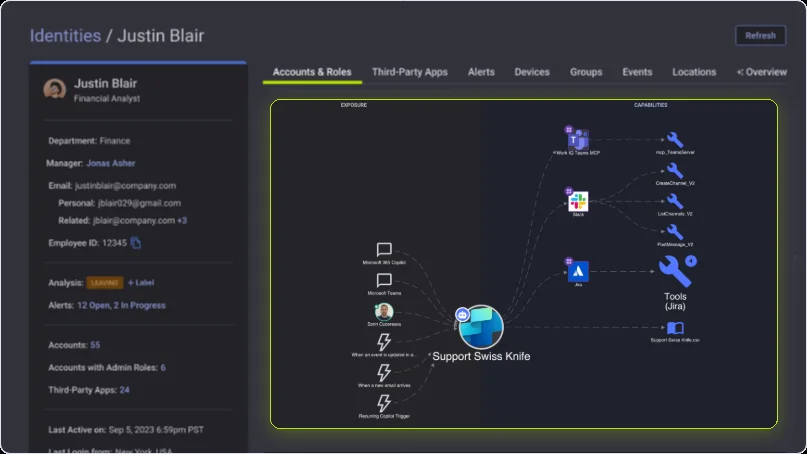
Source: Reco
Pillar Security

Best for: Securing homegrown AI agents from testing to runtime
Strengths: Agentic red teaming linked to self-improving runtime guardrails
Things to consider: Runtime guardrails require gateway or API integration
Pillar Security is a platform for discovering, testing, securing, and governing AI agents, models, MCP servers, and skills. It catalogs AI assets through agentless integrations, including shadow AI and coding agents. It also maps how agents, tools, permissions, and data sources connect.
Pillar runs multi-turn adversarial tests against complete AI systems and feeds validated findings into runtime guardrails that inspect agent interactions. It can be deployed in the cloud, self-hosted, or in hybrid configurations.
Key features include:
- Agent and AI discovery: Catalogs agents, models, prompts, frameworks, tools, MCP servers, skills, and coding agents, including unapproved systems.
- Agent posture and supply chain (AI-SPM): Traces dependencies across models and agent harnesses. It scans agent configurations, permissions, and identities for exposures.
- Attack surface exposure: Maps connections between agents, tools, permissions, and data sources to prioritize remediation by blast radius.
- Agentic red teaming: Runs multi-turn attacks that test tool orchestration, permission escalation, and agentic workflows. Findings include transcripts, recordings, and reproduction steps.
- Self-improving guardrails: Refines runtime protection using red teaming findings and real interactions, calibrated to each agent’s business purpose.
- Data privacy enforcement: Detects PII, PHI, credentials, and secrets in AI interactions, and masks, blocks, or logs them.
- Governance and compliance: Enforces approved models, licensing, and data sovereignty rules, and generates audit reports mapped to standards and frameworks.
Limitations (based on publicly available sources):
- Traffic routing for runtime: Runtime guardrails inspect traffic sent to Pillar, for example through an AI gateway integration, so coverage depends on how traffic is routed.
- Additional scanning steps: In gateway integrations, inputs are scanned before the model call and output guardrails run sequentially, which adds steps to each request.
- Limited independent reviews: Gartner Peer Insights lists no user reviews for the platform yet.
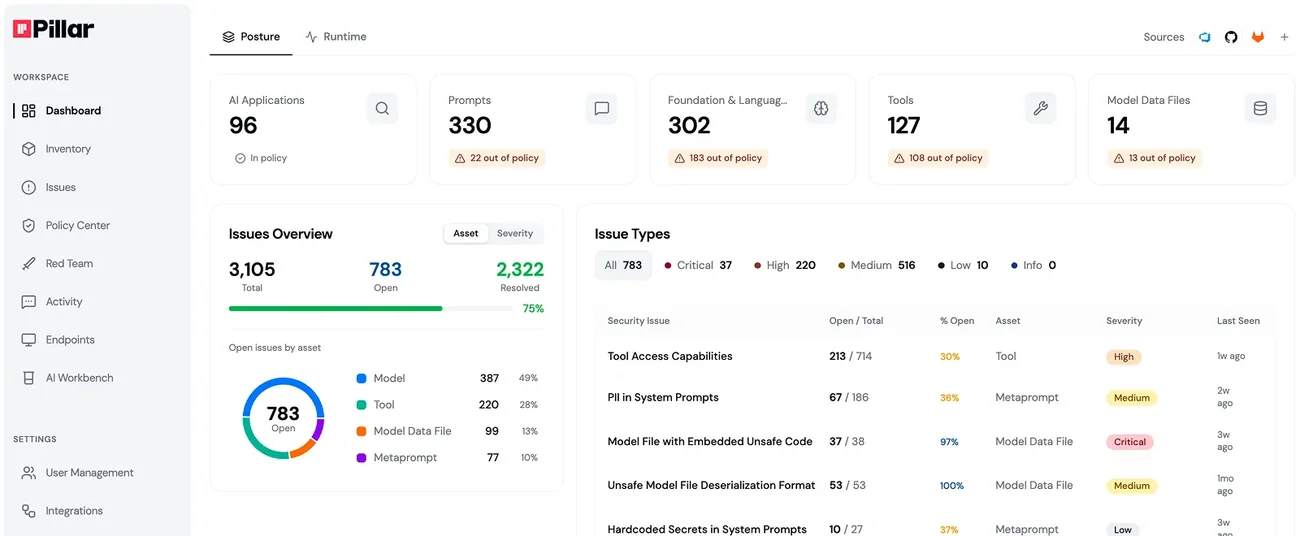
Source: Pillar Security
Runtime Protection and Guardrails for AI Agents
Venice for Runtime Protection and Guardrails for AI Agents
Best for: Preventing unauthorized AI agent actions through task-aware runtime access controls
Strengths: Per-call authorization, task drift detection, credential isolation, and immediate access revocation
Things to consider: Focuses on agent actions and access enforcement rather than prompt injection filtering or model-level guardrails
Venice provides runtime security for AI agents through its Agentic Gateway, which sits between agents and the resources they access. Instead of granting broad permissions for an entire session, Venice evaluates individual agent calls against the task authorized by the agent's owner, allowing legitimate operations while blocking requests that exceed their approved scope.
The platform applies Zero Standing Privilege and just-in-time access to AI workflows, preventing agents from directly accessing credentials or retaining unnecessary permissions. Its runtime controls combine identity verification, task-aware authorization, policy enforcement, and session auditing to reduce the risks of agent misuse, privilege escalation, and unauthorized resource access.
Key features for runtime protection and guardrails:
- Agentic Gateway: Intercepts AI agent requests before they reach protected resources and evaluates whether each action is permitted under the agent's assigned task and access policies.
- Per-call runtime authorization: Evaluates individual tool and resource requests rather than relying on a single authorization decision at the beginning of an agent session.
- Task drift detection and prevention: Compares agent actions against the declared task and blocks calls that fall outside the approved scope, helping prevent agents from performing unintended operations.
- Just-in-time privilege enforcement: Grants agents only the access required for their current tasks and automatically revokes permissions when those tasks end.
- Credential isolation: Keeps privileged credentials outside the agent's environment, injecting authorized access at the gateway rather than exposing reusable secrets to the agent.
- MCP and tool-use governance: Uses its gateway to control access to tools and connected resources, with tool mappings and permissions defined for individual agents.
- Contextual policy enforcement: Evaluates agent identity, task requirements, and risk context to determine whether requests should be allowed, denied, or escalated for human approval.
- Runtime session monitoring and audit: Records agent requests, authorization decisions, and session activities, linking actions to the responsible identities for security investigations and compliance reviews.
Limitations (based on publicly available sources):
- Access-focused runtime protection: Venice primarily enforces authorization and privilege controls. It does not publicly position its gateway as a comprehensive prompt injection detector, content moderation engine, or sensitive-data classification system.
Prisma AIRS

Best for: Enterprises on Palo Alto Networks that want broad AI protection
Strengths: AI gateway, runtime security, red teaming, and agent identity
Things to consider: Cost and full value depend on the Palo Alto ecosystem
Prisma AIRS is the AI security platform from Palo Alto Networks. It covers AI applications, agents, models, and data from development to deployment. It discovers AI apps and agents, assesses risk continuously, protects AI interactions at runtime, and governs agents.
Runtime protection uses the Precision AI engine to monitor AI traffic for prompt injection, sensitive data exposure, malicious URLs, and toxic content. Dedicated agent security addresses memory manipulation and tool misuse. The platform offers Network Intercept and API Intercept deployment modes.
Key features include:
- AI Gateway: Acts as a control plane to discover, govern, and secure AI activity across the enterprise.
- AI Runtime Security: Monitors AI behavior and enforces real-time safeguards against manipulation, data exposure, and unsafe actions.
- Agent Identity Security: Applies identity controls to enterprise AI agent deployments.
- Agentic Endpoint Security: Governs autonomous agents running on endpoints in real time.
- AI Red Teaming: Simulates real-world attacks against agents and applications.
- AI Supply Chain Security: Scans third-party models for tampering, malicious scripts, and deserialization attacks.
- AI Posture Management: Covers data used for training or inference, the integrity of agents and apps, and access to deployed models.
Limitations (as reported by users on Gartner Peer Insights):
- Ecosystem dependence and cost: Reviewers describe the platform as expensive and say full value requires broad use of Palo Alto Networks products. Licensing is described as complex for smaller firms.
- Configuration complexity: Setting up granular policies is described as cumbersome, with a significant learning curve for administrators.
- Maturing features: Some users find certain features, integrations, and customization options early-stage, and say documentation for advanced use cases should be expanded.
- Alert tuning: Alerts and reports may need adjustment to fit a specific environment, which adds manual work.
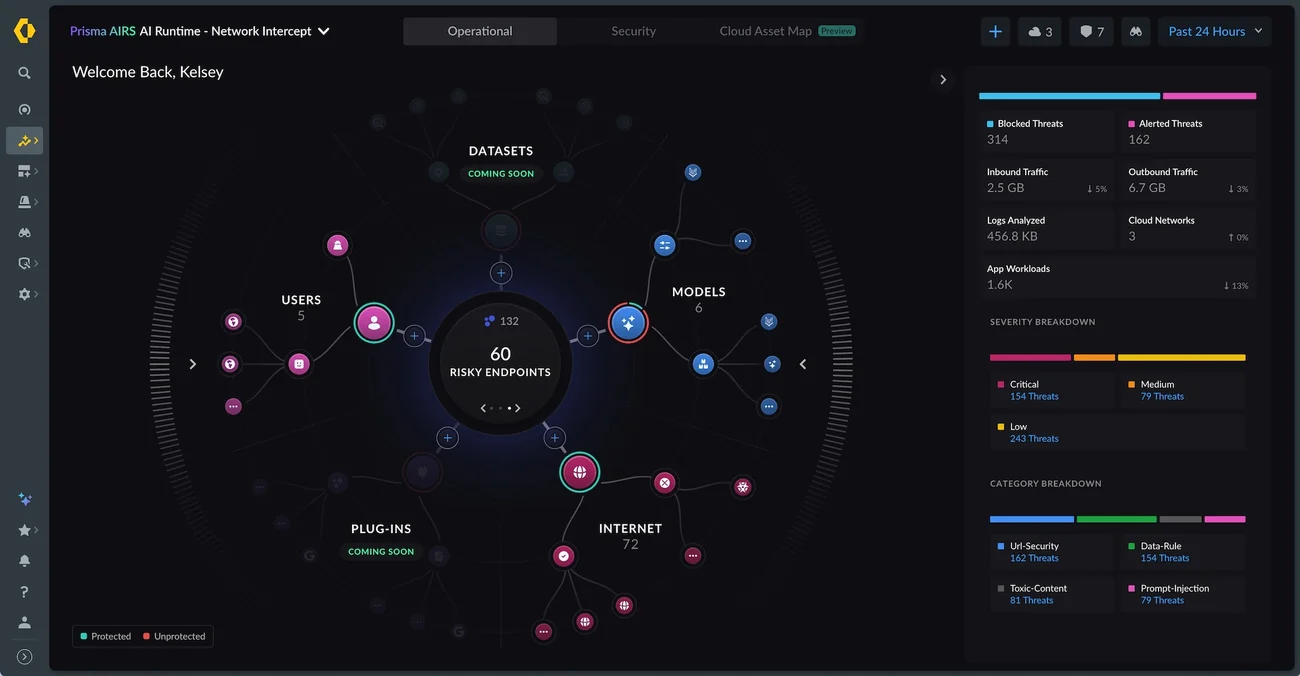
Source: Palo Alto Networks
Check Point Lakera AI Agent Security

Best for: Real-time screening of prompts, outputs, and tool use in AI apps
Strengths: Low-latency prompt attack and data leakage detection
Things to consider: Delivered as an external API; customization can be limited
Lakera, now part of Check Point, provides AI Agent Security for discovering, assessing, and protecting AI agents. It inspects inputs, controls outputs, and governs agent actions without changes to models or prompts. Runtime latency is under 50 ms.
The product discovers agents and MCP-connected tools across cloud, low-code, and custom environments. It assesses each agent based on configuration, tools, data access, MCP servers, and autonomy, and enforces access controls and guardrails at runtime. Detection covers more than 100 languages and draws on attack data from more than one million hackers.
Key features include:
- Agent discovery and MCP visibility: Finds agents and MCP-connected tools, including ones teams did not register, and identifies the data, APIs, and systems they can reach.
- Risk assessment: Scores each agent based on its configuration, tools, data access, MCP servers, and degree of autonomy.
- Prompt attack prevention: Blocks prompt injection, jailbreaks, and adversarial instructions before they reach the model, including indirect injection through connected tools.
- Data leakage protection: Detects sensitive data in prompts and responses.
- Runtime enforcement: Applies access controls and guardrails to block unsafe tool use and unauthorized agent actions.
- Central policy control: Lets teams customize policies across applications without code changes, with multimodal and model-agnostic support.
- AI Red Teaming: Lakera Red provides risk-based testing of AI applications, available as a product or an expert-led service.
Limitations (based on publicly available sources):
- External service dependency: Lakera’s guard runs as an external API, so applications depend on a call to an outside service for each screening decision.
- Customization and cost: Early user feedback summarized by third-party reviews notes limited customization options and higher cost.
- Enterprise-only policy API: Programmatic management of policies and projects through the Platform API is available to Enterprise customers.
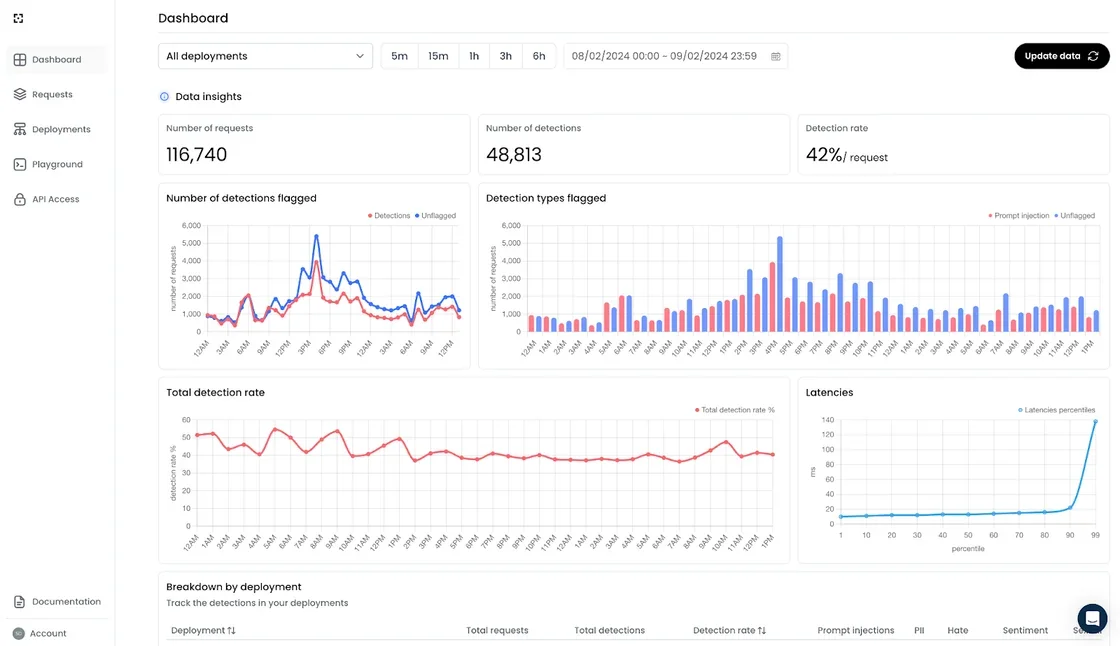
Source: Lakera AI
Cisco AI Defense

Best for: Cisco customers securing AI apps and agents at the network layer
Strengths: Network-level guardrails, algorithmic red teaming, and MCP scanning
Things to consider: Complex setup; more effort outside Cisco environments
Cisco AI Defense secures organizations that use third-party AI applications and those that build their own. It discovers AI workloads, models, applications, data, and users across distributed cloud environments. It also tests models for vulnerabilities and applies runtime guardrails.
Enforcement runs in the network fabric, so AI Defense applies controls without agents or libraries inside applications. Detections draw on threat intelligence from Cisco’s AI research lab and Talos. AI Defense also aligns with NIST, MITRE ATLAS, and the OWASP LLM Top 10.
Key features include:
- AI Cloud Visibility: Inventories AI models and connected data sources across distributed environments.
- AI Model and Application Validation: Uses algorithmic red teaming to assess model safety and security vulnerabilities at scale.
- AI Runtime Protection: Applies network-embedded guardrails against prompt injection, denial of service, data leakage, code detection, and off-topic attacks.
- MCP and agent protection: Inspects MCP traffic between agents and MCP servers in real time and applies agent-specific guardrails.
- AI Supply Chain Risk Management: Scans model files and MCP servers for vulnerabilities before deployment.
- AI Access: Monitors and manages employee access to third-party AI applications and limits sensitive data exposure.
- Explorer Edition: Lets AI builders red team their models and agents before moving to the enterprise version.
Limitations (as reported by users on Gartner Peer Insights):
- Complex initial setup: Reviewers describe setup as complex and dashboard customization as limited.
- Documentation and learning curve: Users find some features hard to use correctly, and the initial experience overwhelming for teams new to AI security.
- Basic analytics and reporting: Reviewers note that analytics and reporting capabilities are limited.
- Integration outside Cisco: Teams using non-Cisco tools report extra effort to reach full interoperability.
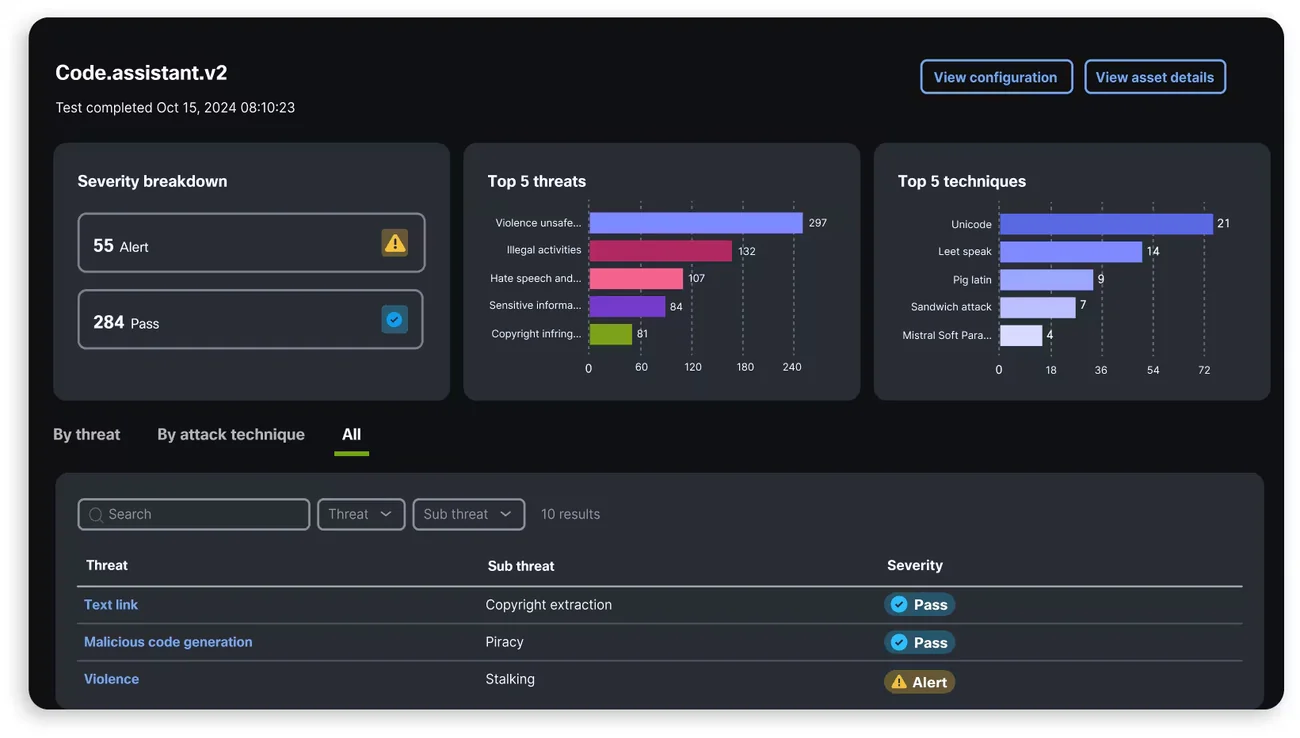
Source: Cisco
HiddenLayer

Best for: Protecting AI models and agentic apps across the AI lifecycle
Strengths: Model scanning, attack simulation, and runtime AI firewall
Things to consider: Deployment and integration may need ML engineering effort
HiddenLayer provides an AI security platform for agentic, generative, and predictive AI applications. It combines AI discovery, AI supply chain security, AI attack simulation, and AI runtime security, backed by patented technology and in-house adversarial AI research.
The runtime component acts as a firewall that monitors, detects, and responds to adversarial threats against agentic and generative AI applications. HiddenLayer also offers protection for tool-using agents, MCP interactions, and AI coding agents. It integrates with CI/CD, MLOps, data pipelines, and SIEM/SOAR tools.
Key features include:
- AI Discovery: Builds an inventory of AI applications, models, and assets to identify shadow AI.
- AI Supply Chain Security and model scanning: Validates model integrity and detects malicious models, backdoored weights, and vulnerable dependencies before deployment.
- AI Attack Simulation: Runs adversarial simulations continuously against agentic and generative AI applications.
- AI Runtime Security: Detects and responds to attacks on AI applications in production.
- AI Guardrails: Enforces policies against prompt injection, data leakage, and unsafe AI behavior.
- Agentic and MCP protection: Protects tool-using agents against misuse, escalation, and cross-system exploitation, and guards against rogue behavior.
- Agent Harness Security: Provides runtime visibility, threat detection, and inline enforcement for AI coding agents.
Limitations (as reported by users on Gartner Peer Insights):
- Deployment effort: A reviewer reports that the integration is hard to deploy and needs ML and infrastructure engineers to maintain.
- Documentation and learning curve: Users note that documentation for advanced configuration could be more detailed, and that teams new to AI security face an initial learning curve.
- Pricing transparency: Reviewers say pricing could be clearer for smaller teams.
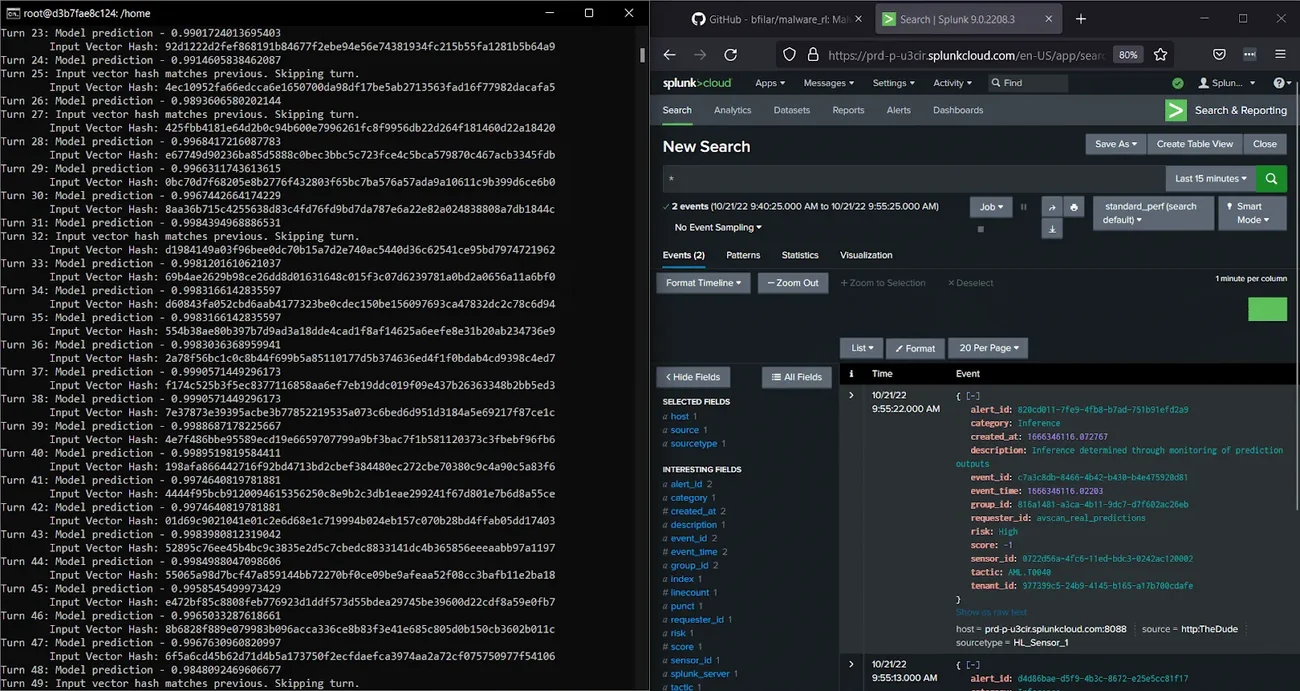
Source: HiddenLayer
Conclusion
As AI agents gain autonomy and expand across enterprise networks, securing their interactions, access permissions, and runtime behavior becomes essential. Implementing comprehensive agentic AI security solutions allows organizations to enforce least-privilege access, prevent unauthorized actions, and maintain complete visibility into agent activities. By establishing robust guardrails and continuous oversight, enterprises can safely harness the full power of autonomous AI while safeguarding critical assets and ensuring long-term resilience.
