



What Is Real-Time Enforcement for AI Agents?
Real-time enforcement for AI agents is a security approach that evaluates and controls the actions AI agents attempt to execute before those actions reach external systems, APIs, databases, or enterprise applications. Unlike traditional access controls that primarily determine whether an identity has permission to access a resource, real-time enforcement examines each tool invocation in context, including the agent's identity, requested operation, target resource, permissions, and potential security impact.
This approach uses runtime guardrails to intercept tool calls and apply authorization policies at the moment of execution. Depending on the request's risk level, the enforcement system can allow the action, deny it, require human approval, or restrict the permissions available to the agent. For example, an AI agent may be authorized to query a customer database but prevented from exporting sensitive records or modifying production data without additional approval.
How real-time AI agent call enforcement works:
- Step 1: Identify the agent, human owner, and authorized task: Establish a unique agent identity, accountable owner, and clearly defined permissions.
- Step 2: Intercept tool calls before they reach target resources: Route requests through trusted enforcement points to inspect actions before execution.
- Step 3: Evaluate each request against context-aware access policies: Check identity, task scope, resource sensitivity, and operational context.
- Step 4: Allow, deny, or escalate the request for human approval: Automate permitted actions, block prohibited operations, and escalate sensitive requests.
- Step 5: Grant temporary access and revoke it when the task ends: Issue narrowly scoped permissions that expire automatically or end with the task.
- Step 6: Record authorization decisions and agent activity for auditing: Log requests, policy decisions, approvals, and execution outcomes for monitoring and investigation.
Key capabilities of AI agent guardrail solutions:
- Continuous discovery and inventory of AI agents and their tool access: Track agents, owners, integrations, and effective permissions to identify unmanaged access.
- Real-time interception and enforcement of AI agent tool calls: Inspect requests before execution to block unsafe actions or require authorization.
- Identity-aware and context-based authorization: Evaluate access using agent identity, assigned responsibilities, resource sensitivity, and execution context.
- Task-aware policies to prevent authorized but unintended actions: Restrict operations to approved objectives, even when existing credentials permit broader access.
- Just-in-time access and zero standing privileges for AI agents: Grant temporary permissions when needed and remove persistent privileged access wherever feasible.
- Credential isolation and short-lived token issuance: Keep reusable secrets outside the agent’s reasoning environment and broker narrowly scoped access.
- Centralized policy enforcement across MCP servers, APIs, and enterprise systems: Manage policies centrally and apply consistent controls through distributed enforcement points.
This is part of a series of articles about agentic AI security
In this article
- AI Agent Runtime Guardrail Solutions at a Glance
- Why AI Agents Need Runtime Access Controls
- How Real-Time AI Agent Call Enforcement Works
- Key Capabilities of AI Agent Guardrail Solutions
- Notable AI Agent Runtime Guardrail Solutions
AI Agent Runtime Guardrail Solutions at a Glance
The table below summarizes the key differences between the solutions covered in this guide. We explore each one in more detail in the sections that follow.
Related content: Read our article about agentic AI security solutions
Why AI Agents Need Runtime Access Controls
AI agents need access to tools and enterprise systems to complete tasks, but their autonomy and permissions create security risks. Runtime access controls independently evaluate proposed actions against organizational policies, limiting what agents can do even when their instructions or reasoning lead them astray.
- Actions beyond original instructions: Agents may modify configurations, restart services, or access sensitive data when only analysis was requested. Runtime controls validate each operation against resource-specific policies, blocking unauthorized actions or requiring human approval.
- Standing privileges and lateral movement: Persistent credentials can give agents more access than individual tasks require, increasing the impact of compromise or misuse. Least-privilege authorization and just-in-time, expiring access limit opportunities for privilege abuse and movement between systems.
- Prompt injection and unintended actions: Malicious content can manipulate agents into misusing legitimate permissions, such as sending confidential data externally. Runtime controls enforce resource and destination restrictions, evaluate action context, and require approval for high-risk operations independently of the agent’s instructions.
Related content: Read our guide to AI agent security best practices
How Real-Time AI Agent Call Enforcement Works
Step 1: Identify the Agent, Human Owner, and Authorized Task
The enforcement process begins by establishing the identity of the AI agent, its accountable human owner, and the task it has been authorized to perform. Each agent should have a distinct non-human identity associated with a specific application, workflow, or business purpose. This identity allows the organization to distinguish between agents, attribute their actions, and enforce permissions independently of the human users who initiate their tasks.
The system also establishes the agent's authorized scope of activity, including which resources it may access, which operations it may perform, and any restrictions imposed by the requesting user or organizational policies. For example, an agent assigned to investigate a database performance issue may be authorized to read monitoring metrics and query diagnostic tables but not modify production records. This context provides the foundation for evaluating subsequent tool calls.
Step 2: Intercept Tool Calls Before They Reach Target Resources
When an AI agent attempts to invoke a tool, the request is intercepted by an enforcement component before execution. This component may operate through an API gateway, MCP proxy, tool-calling middleware, or another policy enforcement point integrated into the agent's execution environment. The objective is to ensure that security checks occur before potentially sensitive or destructive operations reach external systems.
The enforcement layer captures relevant details about the proposed action, such as the tool name, requested operation, target resource, input parameters, and agent identity. For example, if an agent attempts to execute a database query or modify a cloud configuration, the system inspects the request before forwarding it. Effective enforcement requires routing applicable tool calls through trusted enforcement points so agents cannot bypass the checks through alternative connections or credentials.
Step 3: Evaluate Each Request Against Context-Aware Access Policies
After intercepting the tool call, the enforcement system evaluates it against predefined security and authorization policies. Unlike static role-based permissions, context-aware policies consider multiple factors, including the agent's identity, assigned task, requested operation, resource sensitivity, execution environment, and potential security risk. Policies may also incorporate user authorization, session context, and the destination of data transfers.
For example, an agent may be permitted to retrieve customer account information for an approved support workflow but prohibited from exporting the same data to an external endpoint. The enforcement system distinguishes between these actions even when both use credentials with sufficient underlying permissions. Policies can also enforce conditions such as restricting production modifications to approved maintenance windows or requiring additional authorization for privileged operations.
Step 4: Allow, Deny, or Escalate the Request for Human Approval
Based on the policy evaluation, the enforcement system determines how to handle the requested tool call. Routine, low-risk operations that satisfy established policies can proceed automatically, while prohibited actions are blocked before execution. Requests involving sensitive data, privileged resources, or potentially destructive changes can be escalated to an authorized human reviewer.
Human-in-the-loop approval enables organizations to preserve agent autonomy without granting unrestricted control over critical systems. For example, an agent may automatically retrieve application logs but require explicit approval before deleting records, changing access permissions, or modifying production infrastructure. Approval requests should provide sufficient context, including the agent's identity, intended operation, affected resources, and potential consequences, so reviewers can make informed decisions.
Step 5: Grant Temporary Access and Revoke It When the Task Ends
Once an operation is approved, the enforcement system can provision narrowly scoped, temporary permissions through just-in-time (JIT) access mechanisms. Rather than relying on persistent administrative credentials, the agent receives access limited to the approved resource, operation, and duration. Depending on the target system, this may involve issuing short-lived credentials, assuming a restricted cloud role, or temporarily activating specific entitlements.
Access should expire automatically after a defined period or be revoked when the authorized task is completed, whichever occurs first. For example, an agent approved to update a specific cloud resource might receive temporary write permissions that expire immediately after the operation or within a short authorization window. This supports zero standing privilege principles and reduces the risk of unused permissions being exploited during subsequent agent interactions.
Step 6: Record Authorization Decisions and Agent Activity for Auditing
Every enforcement decision should generate an audit record that captures the agent's identity, associated human owner, requested tool, target resource, policy evaluation, and resulting action. Records should indicate whether the operation was allowed, denied, or approved by a human reviewer, along with relevant timestamps and authorization context. Where possible, the system should also correlate tool requests with the resulting execution outcomes.
Centralized audit trails enable security teams to investigate suspicious agent behavior, identify repeated policy violations, and demonstrate compliance with internal governance requirements. Integrating enforcement logs with security information and event management (SIEM) platforms and identity security tools also supports continuous monitoring and incident response. Over time, organizations can analyze these records to refine access policies, reduce unnecessary approval requests, and identify agents that consistently request permissions beyond their authorized responsibilities.
Key Capabilities of AI Agent Guardrail Solutions
Continuous Discovery and Inventory of AI Agents and Their Tool Access
Organizations need visibility into the AI agents operating across their environments, including agents created by development teams, embedded in third-party applications, or deployed through agentic AI frameworks. Modern runtime guardrail solutions can help discover and maintain an inventory of these agents, their associated non-human identities, connected tools, and effective permissions.
Discovery should extend beyond identifying individual agents to mapping their relationships with MCP servers, APIs, cloud resources, databases, and enterprise applications. Each agent should be associated with a named human owner, defined business purpose, and documented access scope. This visibility helps security teams identify unmanaged agents, excessive permissions, unused integrations, and potential paths to sensitive resources. Continuous updates are particularly important because agents may dynamically acquire new tools or connections as their workflows evolve.
Real-Time Interception and Enforcement of AI Agent Tool Calls
Real-time interception enables security controls to evaluate agent-initiated operations before they reach external systems. Instead of relying exclusively on permissions assigned when an agent is deployed, runtime guardrails inspect individual tool calls and determine whether each requested action complies with organizational security policies.
Enforcement can occur through MCP proxies, API gateways, agent middleware, or other policy enforcement points positioned between agents and their target resources. These components examine the requested operation, tool parameters, destination, and relevant execution context before allowing the request to proceed. Depending on the policy decision, the system can permit the operation, block it, or require additional authorization. This approach is especially valuable for preventing destructive commands, sensitive data exports, and unauthorized infrastructure changes.
Related content: Read our article about Claude Code security
Identity-Aware and Context-Based Authorization
Identity-aware authorization connects every tool call to the AI agent responsible for initiating it, its human owner, and the permissions associated with its authorized role or task. Rather than treating agents as interchangeable service accounts, modern guardrails distinguish between individual agent identities and enforce access policies according to their specific responsibilities.
Context-based authorization extends these checks by considering the requested resource, operation, environment, data sensitivity, and execution circumstances. For example, an agent may be authorized to read application metrics in a production environment but prohibited from modifying infrastructure configurations without additional approval. Policies can combine role-based access control (RBAC), attribute-based access control (ABAC), and fine-grained resource-level authorization to ensure that access decisions reflect both identity and operational context.
Task-Aware Policies to Prevent Authorized but Unintended Actions
Traditional authorization mechanisms typically determine whether an identity possesses sufficient permissions to perform an operation. However, AI agents can misuse legitimate permissions when they misinterpret instructions, follow malicious content, or independently select an inappropriate workflow. Task-aware authorization addresses this problem by evaluating whether a requested action aligns with the agent's approved objective, rather than relying solely on its existing access rights.
For example, a customer support agent may have legitimate access to customer records and an email integration. However, exporting an entire customer database to an external address would fall outside the scope of a task involving a single support ticket. Task-aware policies can enforce restrictions on permitted operations, resource scope, data destinations, and high-risk action sequences. These controls help mitigate prompt injection and other attempts to trigger authorized but unintended actions, even when the agent possesses valid credentials.
Just-in-Time Access and Zero Standing Privileges for AI Agents
Just-in-time (JIT) access allows AI agents to receive permissions only when they are required for an authorized operation. Rather than maintaining persistent access to sensitive systems, agents request temporary privileges that are evaluated against security policies and provisioned for a limited duration. This reduces the opportunities for compromised or manipulated agents to exploit unused permissions.
Zero standing privilege extends this approach by eliminating persistent privileged access wherever technically feasible. For example, an infrastructure management agent may receive temporary authorization to restart a specific service but retain no standing administrative permissions between tasks. Modern guardrails can automate low-risk access requests, require human approval for sensitive operations, and revoke elevated privileges when the task ends or the authorization expires. This limits the impact of agent compromise while preserving the efficiency of autonomous workflows.
Related content: Read our guide to privileged access management
Credential Isolation and Short-Lived Token Issuance
AI agents frequently require credentials to authenticate with external systems, but exposing long-lived API keys, service account passwords, or cloud access tokens creates significant security risks. Credentials embedded in agent configurations, prompts, or execution environments may be exposed through logging, misconfigurations, prompt injection, or compromised runtime components.
Modern runtime guardrail architectures can isolate credentials from the agent's reasoning environment and provision short-lived, narrowly scoped tokens for authorized operations. Instead of providing agents with reusable secrets, a trusted credential broker or enforcement component can obtain the necessary credentials and execute approved requests on the agent's behalf. Token scope, audience, and expiration should be restricted to the intended resource and action. This approach reduces credential exposure, limits token reuse, and supports automated revocation without requiring agents to manage privileged secrets directly.
Centralized Policy Enforcement Across MCP Servers, APIs, and Enterprise Systems
Enterprise AI agents often interact with multiple systems through different communication protocols, tool frameworks, and authentication mechanisms. An agent might retrieve information from an MCP server, update records through a REST API, and perform administrative operations against cloud infrastructure within the same workflow. Managing security policies separately for every integration creates inconsistencies and increases the risk of enforcement gaps.
Centralized policy enforcement provides a consistent authorization model across these environments. Organizations can define policies governing agent identities, resource access, permitted operations, approval requirements, and temporary privilege elevation from a common control plane. Distributed enforcement points then apply these policies at the relevant MCP servers, APIs, and enterprise integrations.
This architecture simplifies policy management, supports consistent audit logging, and reduces dependence on security controls embedded in individual agents. It also allows organizations to update authorization requirements centrally as new tools, agents, and resources are introduced, provided that all relevant access paths are covered by enforcement controls.
Notable AI Agent Runtime Guardrail Solutions
How we selected these solutions: We shortlisted runtime guardrail solutions for AI agents based on their ability to intercept tool calls before execution, authorize actions using agent identity and task context, issue temporary or brokered credentials, escalate high-risk actions for human approval, and record every decision for audit.
Identity-Centric Runtime Access Platforms for AI Agents
1. Venice

Best for: Task-scoped, just-in-time access for AI agents, humans, and NHIs
Strengths: Evaluates every agent call against its declared task
Things to consider: Agentic Gateway is newer than the core PAM platform
Venice is a privileged access management (PAM) platform that governs human, machine, and AI agent identities through just-in-time (JIT) access and zero standing privilege across hybrid, cloud, and on-prem environments. Its Agentic Gateway sits between every agent and every resource and checks each call against the task the agent was created to perform.
Agents in Venice do not hold credentials and must request access, which is granted for the task and revoked when the task ends. Each agent is traced back to the human who built it, and agent activity is evaluated by the same risk engine and recorded in the same audit trail used for humans and non-human identities (NHIs). The platform has a lightweight deployment.
Key features include:
- Runtime authorization at the call: Venice evaluates, decides, and intervenes while an agent call is still in progress, so agents do not wait for a separate policy review before acting.
- Task-scoped, ephemeral access: Agents receive access for a specific task, and that access is revoked as soon as the task ends, leaving no standing permissions between tasks.
- Access only by request: Agents must request access through Venice, which keeps them inside policy and blocks lateral movement to resources outside the request.
- Credential isolation: Agents do not receive the credentials for the systems they act on, which removes reusable secrets from the agent’s environment.
- Agent ownership at creation: Every agent is linked to the human who created it and the task it was created for, giving each action a named owner.
- Drift detection in the call: Each call is compared against the declared intended task in real time, and calls outside that scope are blocked and tied to a named identity.
- Context-aware approvals: Policies decide whether a request is approved automatically, routed for manual approval, or blocked, based on identity, task, and risk context.
- Session audit and unified risk engine: Venice records every request, access grant, and session action in one audit trail for humans, NHIs, and agents, organized for investigations and audit sign-off.
Limitations (based on publicly available sources):
- Newer agent capability: The Agentic Gateway is a recently launched addition to the platform, so it has a shorter production track record than Venice’s core PAM capabilities.
- Pricing available on request: Venice does not publish pricing; buyers request a demo to receive a quote.
- Limited independent reviews: Few user reviews are available on public review platforms at the time of writing.
2. Idira Secure AI Agents

Best for: Organizations standardized on Idira (formerly CyberArk) PAM
Strengths: Agent Identity Broker grants access only for a task’s duration
Things to consider: Some Idira features require additional licenses
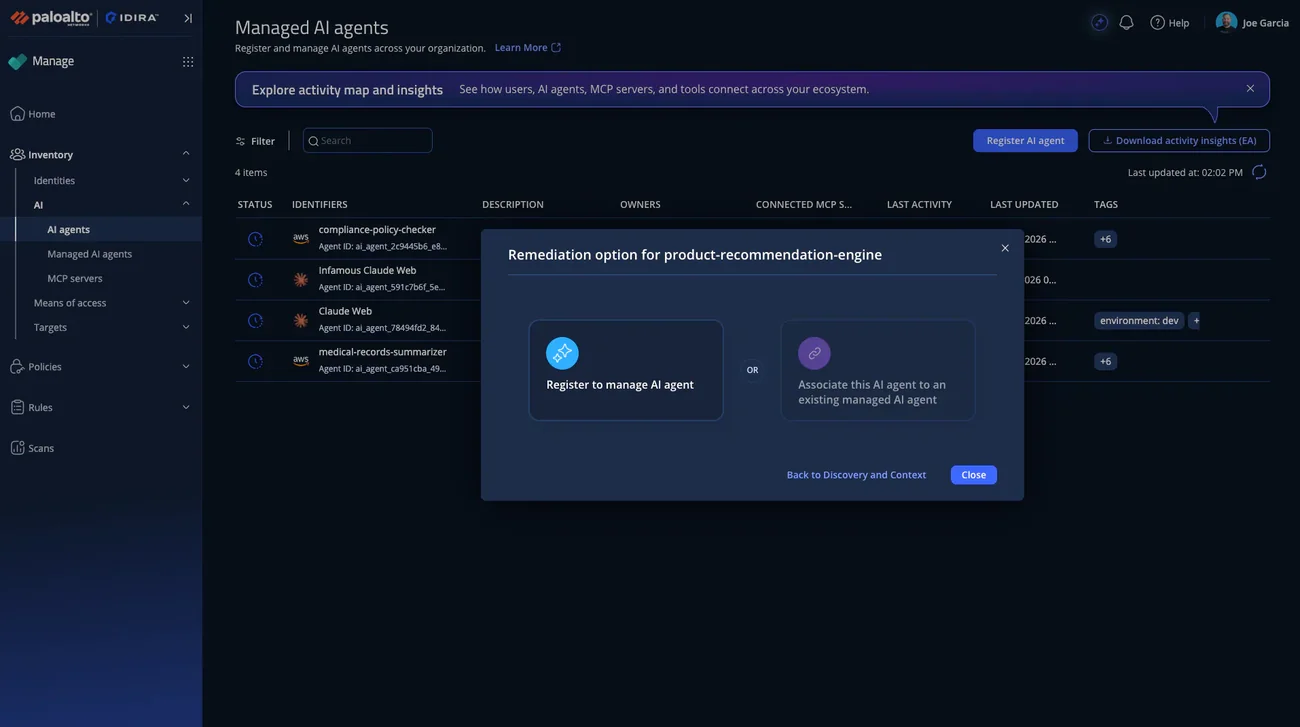
Idira Secure AI Agents is the agentic identity capability of Idira, the identity security platform Palo Alto Networks built on CyberArk technology. It extends the privilege controls used for human and machine identities to AI agents, and scans SaaS, cloud, and developer environments to find active agents and record their ownership, purpose, status, and permission levels.
Runtime control is handled by an Agent Identity Broker that acts as a dynamic enforcement point, granting agents access only for the duration of a specific task and revoking permissions when the job is done. The solution also logs agent actions and communications, and it is available natively with Prisma AIRS, where each agent’s identity is used to control access to resources.
Key features include:
- Agent registry and discovery: Discovers agents across SaaS, cloud, and developer environments and onboards them into a centralized repository showing what is running and where.
- Agent context: Enriches each agent with ownership, purpose description, status, and permissions, so teams can see who owns an agent, what it does, and what it can reach.
- Agent Identity Broker: Enforces dynamic access policies that apply least privilege and JIT access to agents, removing standing privileges once a task completes.
- Agent kill switch: When an agent deviates from its mission, the broker can deny access and stop the agent from reaching further resources.
- Lifecycle management: Supports onboarding, ownership workflows, and decommissioning, with visibility into which permissions are actually in use.
- Audit and governance: Audit records show which human initiated the agent, which agent identity acted, which tools ran, and which resource was touched, along with access reviews.
- Prisma AIRS integration: Prisma AIRS customers can use each agent’s identity to manage resource access, reduce over-privilege, and protect credentials.
Limitations (based on publicly available sources):
- Additional licensing for some features: Palo Alto Networks has stated that some Idira capabilities require extra licenses beyond the base platform.
- Platform transition in progress: Existing CyberArk customers are moving to the Idira brand, with cross-platform capabilities across the Palo Alto Networks portfolio being introduced over time.
- Discovery coverage by platform: Published materials name specific agent environments such as AWS Bedrock and Microsoft Copilot Studio, so coverage for other agent platforms should be confirmed during evaluation.
Source: Palo Alto Networks
3. Okta for AI Agents

Best for: Organizations already using Okta as their identity provider
Strengths: Agent Gateway enforces identity and policy on every tool call
Things to consider: Feature coverage differs between product SKUs
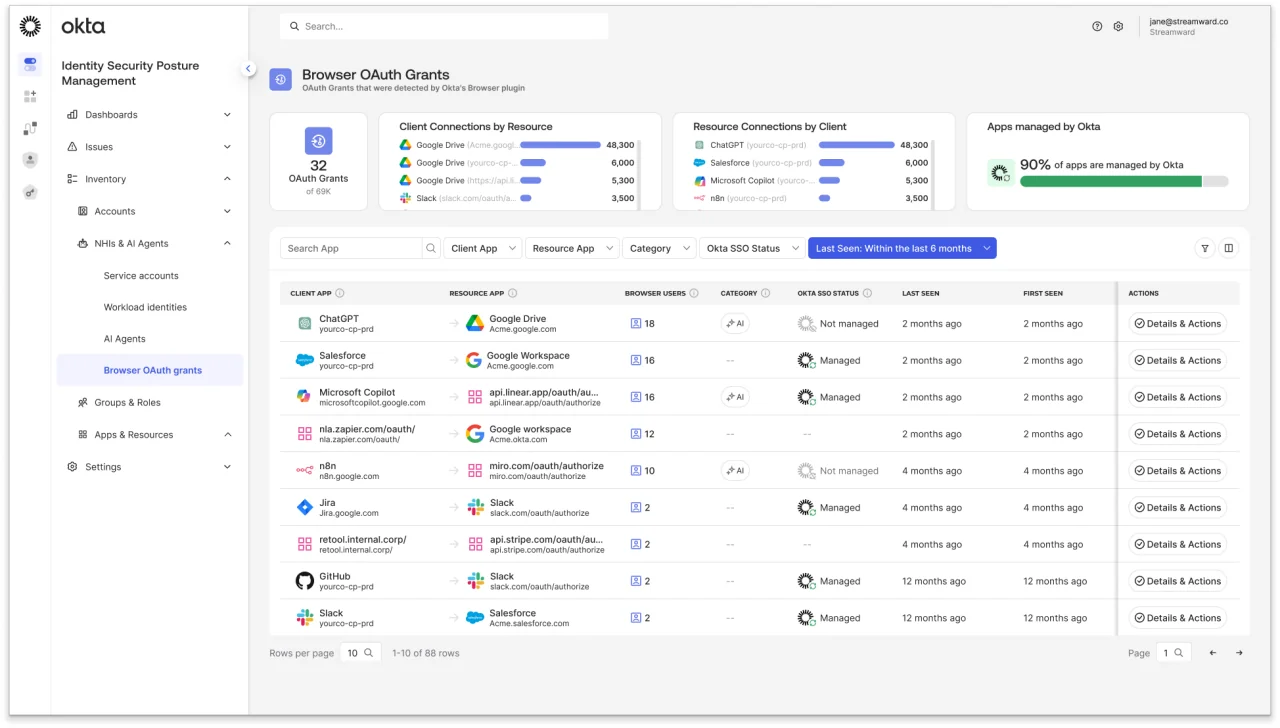
Okta for AI Agents registers AI agents as first-class identities in Okta’s Universal Directory, alongside employees and other identities, and assigns each agent a human owner. It detects unmanaged agents on browsers and endpoints and brings agents from other platforms and identity providers into the same directory for governance.
At runtime, Okta’s Agent Gateway sits in the path of every tool call to verify the agent, broker credentials, and log each call without code changes to agents or tools. Okta issues short-lived credentials in place of static API keys, supports human approval for high-risk actions, and provides a kill switch to revoke an agent’s access quickly.
Key features include:
- Agent discovery and registration: Scans browsers, managed endpoints, and cloud environments for unvetted agents and unauthorized OAuth consent grants, then registers agents with owners and business purposes.
- Agent Gateway: Enforces identity, policy, and audit on each tool call, brokering credentials at runtime so agents do not hold them directly.
- Prompt-level tool scoping: Filters out MCP tools the delegating user is not authorized for before the model runs, which limits the actions an agent can attempt.
- Scoped credentialing: Issues ephemeral, secretless tokens and vaults credentials to reduce static API keys and standing administrative access.
- Human-in-the-loop approvals: Requires step-up approval for high-risk actions such as financial transactions, bulk database exports, or permission changes.
- Access certifications: Runs automated access reviews and certification campaigns to remove stale agent permissions as projects change.
- Kill switch and audit: Revokes an agent’s access programmatically when it behaves unexpectedly and records tool calls and authorization decisions for SIEM streaming.
- Third-party IdP support: Governs agents from identity providers that implement the Cross App Access (XAA) protocol from one control plane.
Limitations (based on publicly available sources):
- Third-party IdP support depends on XAA: Governance of agents from other identity providers currently requires those providers to support Cross App Access, with non-XAA support still being expanded.
- Feature scope varies by SKU: The Core SKU for FedRAMP and DoD environments covers registration, authentication, lifecycle provisioning, and audit logging, while posture management and privileged access capabilities sit in the full SKU.
- Pricing not published: Okta does not list pricing for the agent offering, and the agent layer is typically added to an existing Okta identity contract.
- Browser discovery scope: Shadow agent detection through the Okta browser plugin applies to managed Chrome and Microsoft Edge browsers.
Source: Okta
4. Ping Identity for AI

Best for: Delegated, per-action authorization for agents acting for users
Strengths: Contextual runtime authorization with human approval steps
Things to consider: Agent detection is delivered through PingOne Protect
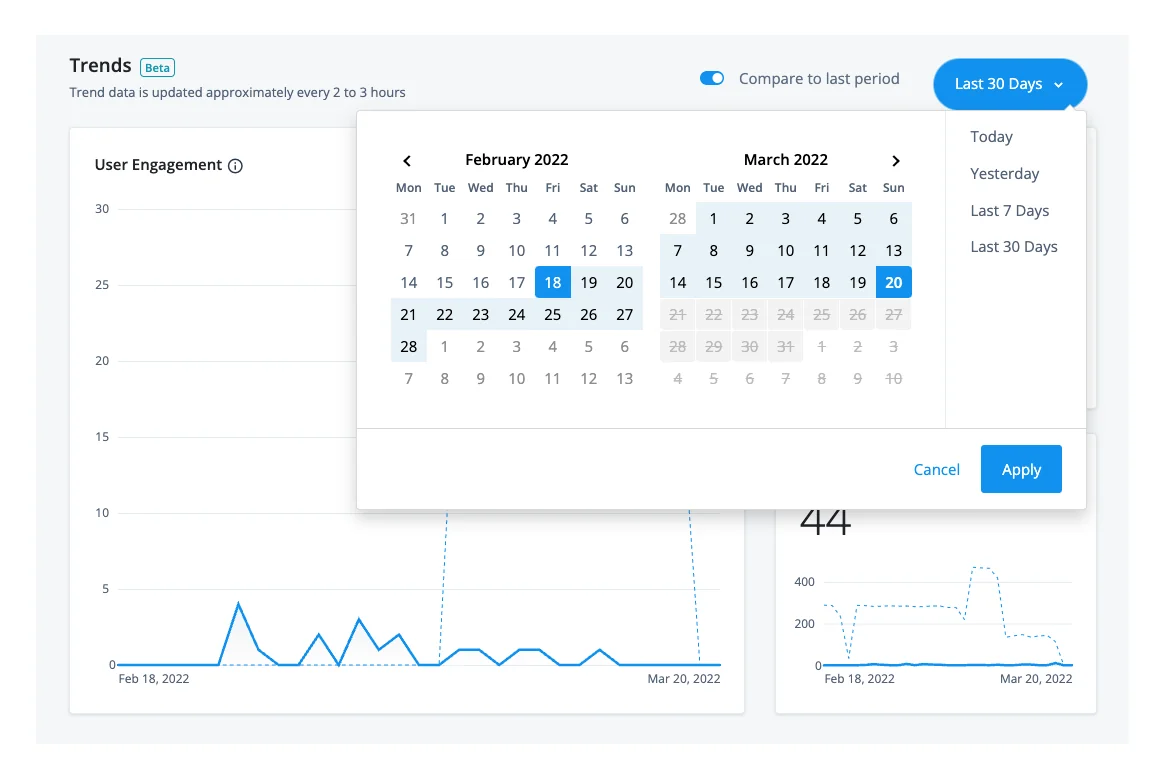
Ping Identity for AI treats AI agents as first-class identities that are distinct from the humans they act for. Agents are registered with unique credentials, defined roles, and access controls, and Ping evaluates each agent action in real time, issuing narrowly scoped, delegated authority based on context, risk, and intent rather than static sessions or roles.
The offering combines Agent IAM Core for agent identity, an Agent Gateway that sits in front of MCP servers and other resources, and PingOne Protect for detecting and classifying agents. High-risk actions can require human approval and step-up verification, and every agent action is logged and enforced against policy.
Key features include:
- Agent lifecycle management: Registers, manages, and deprovisions agents as first-class identities, each with unique credentials, clear roles, and access controls.
- Contextual authorization at runtime: Evaluates each agent action as it happens and issues delegated authority scoped to the specific request.
- Explicit delegation with human oversight: Defines what agents may do on a user’s behalf and applies human approval and step-up verification to high-risk actions before they run.
- Agent Gateway: Manages access to MCP servers and resources, enforcing least privilege and monitoring how agents use connected tools and data.
- Detection and classification: Evaluates agent identity, behavior, and intent to separate trusted agents from malicious ones, going beyond simple bot blocking.
- Per-action enforcement and audit: Logs every agent action and evaluates it against policy in real time for a complete activity record.
- Integration with existing IAM: Extends the Ping Identity platform and works with existing standards-based authentication, authorization, and governance tools.
Limitations (based on publicly available sources):
- Gateway authorization scope: Ping’s release notes describe the agent gateway as validating delegation tokens and enforcing scopes and coarse-grained authorization before requests reach backend resources.
- Capabilities still expanding: Ping has stated that future releases will extend authorization and governance capabilities for agent and MCP access.
- Detection sold through a separate product: Agent detection is delivered through PingOne Protect rather than the core agent identity components.
- Self-managed component requirements: Self-managed deployments rely on PingGateway as the agent gateway and PingAM 8.1 for agent support.
Source: Ping Identity
AI Agent Runtime Security and Tool-Call Guardrail Platforms
5. Zenity

Best for: Governing agents across SaaS, cloud, and coding environments
Strengths: Posture, exposure testing, and runtime enforcement in one platform
Things to consider: Enforcement depth varies by agent platform
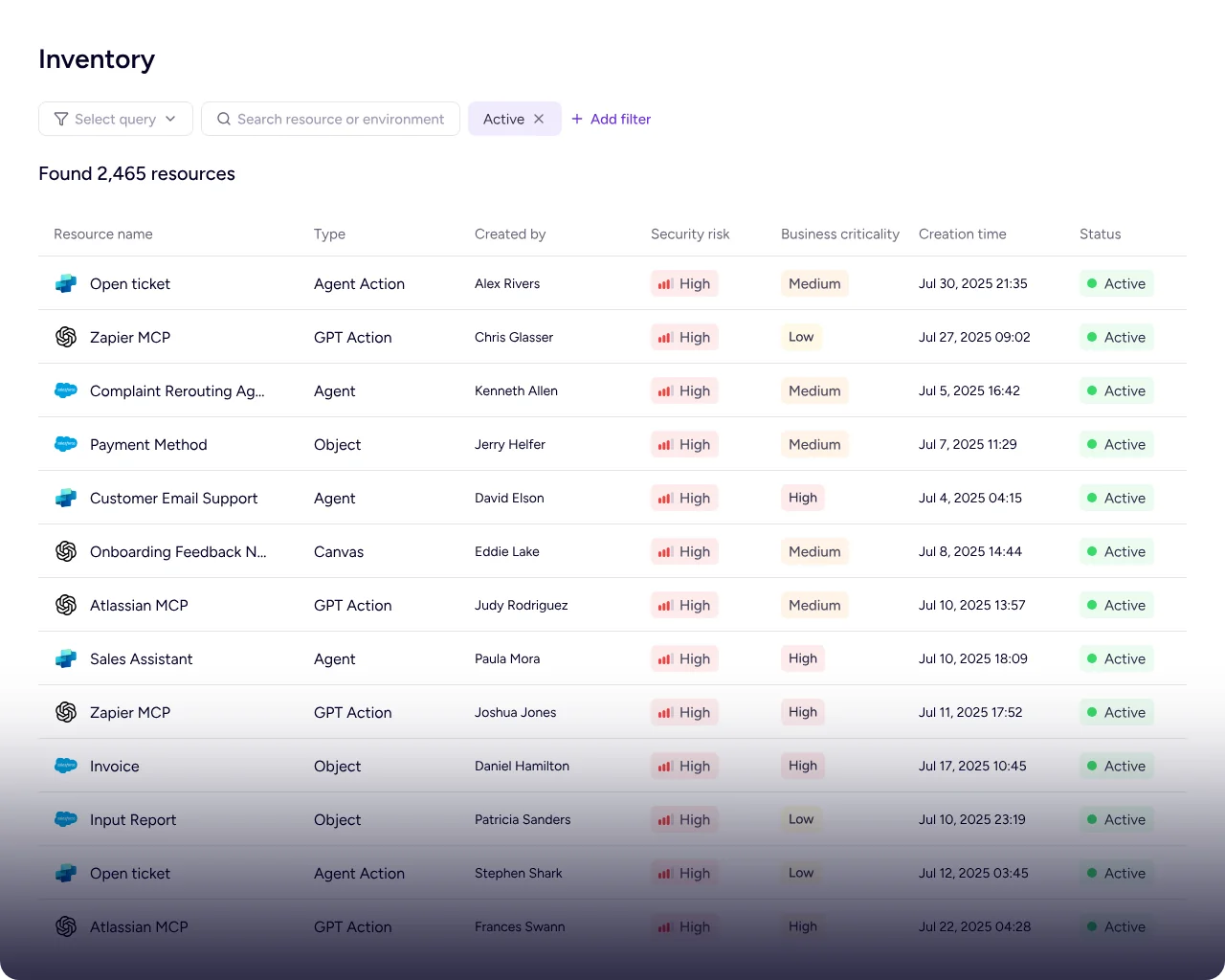
Zenity is an AI agent security and governance platform that covers agents embedded in SaaS tools such as Salesforce Agentforce and Copilot Studio, homegrown agents on platforms such as AWS Bedrock and Google Vertex AI, and personal and coding agents on endpoints. It governs how agents behave and what actions they take, not only what they generate.
The platform is organized into three layers. Surface builds an inventory of agents and tests what is exploitable, Enforce acts at the moment an agent makes a decision by allowing safe actions and stopping unsafe ones, and Protect detects threats that get through and turns them into new rules.
Key features include:
- AI Observability: Builds a live inventory of agents across SaaS, custom, and endpoint deployments and tracks the data each agent touches.
- AI Security Posture Management (AISPM): Evaluates agent configuration and permissions against policy before an agent goes live.
- AI Exposure Management: Validates which agent attack paths are actually exploitable, scores each one, and produces a fix that can be applied in Runtime Boundaries.
- Runtime policy enforcement: Applies policy at the moment of action, consistently across environments such as Salesforce Agentforce, AWS Bedrock, and a developer’s IDE.
- Runtime threat detection: Detects threats such as prompt injection, tool misuse, and unauthorized data access that agents create or encounter at runtime.
- Compliance reporting: Produces reporting mapped to OWASP and MITRE ATLAS for audit and board-level review.
Limitations (based on publicly available sources):
- Enforcement depth varies by platform: Third-party comparisons note that the depth of enforcement differs depending on the agent platform being governed.
- No public pricing: Zenity does not publish pricing, so costs require a sales conversation.
- Broad scope for narrow use cases: Reviewers of the category note that the breadth of the platform can exceed what teams with a single, narrow use case need.
- Limited public user reviews: Zenity has few or no ratings on major review platforms such as G2 at the time of writing.
Source: Zenity
6. Cequence AI Gateway

Best for: Routing MCP and API tool calls through one control point
Strengths: Agent Personas, session-level analysis, and inline DLP
Things to consider: Per-user pricing; initial policy tuning takes time
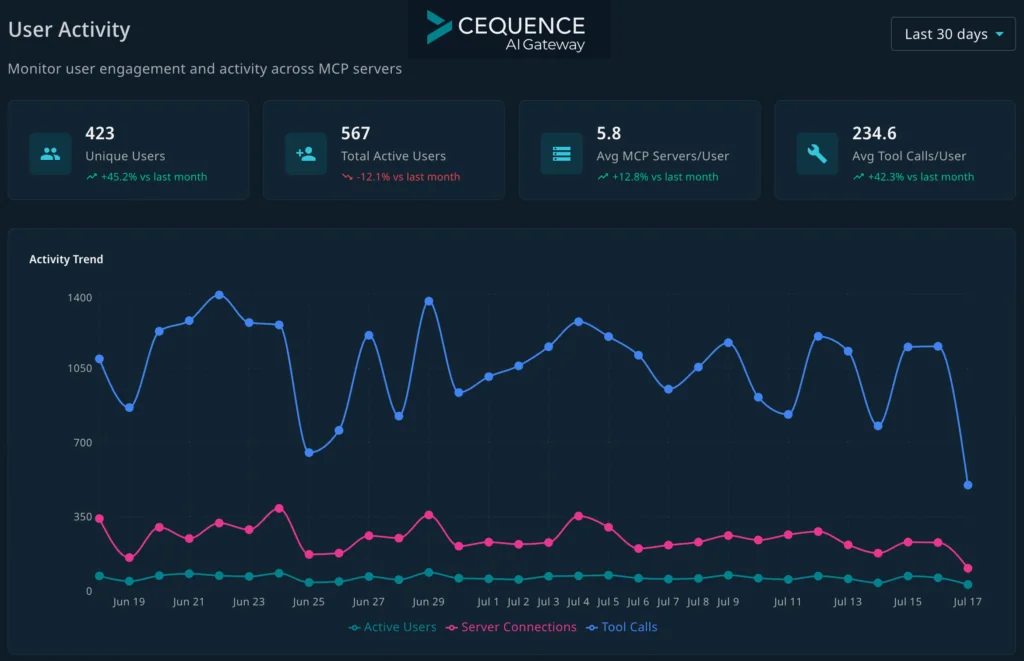
Cequence AI Gateway governs agent actions in real time across models, MCP servers, APIs, and applications. Each agent is scoped by an Agent Persona, a plain-English job description that the gateway converts into a list of permitted tools, APIs, skills, LLMs, and permissions.
The gateway evaluates every tool call in the context of the full session, so it can stop off-task actions and risky chains of individually permitted calls before they complete. Agents authenticate with Agent Access Keys while the gateway brokers backend tokens, which keeps backend credentials away from the agents. It is available as SaaS or on-premises.
Key features include:
- Agent Personas: Generates least-privilege access policies from a job description, and a single persona update applies to every agent that uses it without code changes.
- Agent Behavior Protection: Analyzes an agent’s full sequence of actions to catch chains of authorized calls that add up to risky behavior, and can throttle or halt an agent mid-session.
- Token brokerage: Brokers backend tokens so agents never have direct access to them, with session binding that locks authenticated sessions to originating IP addresses.
- Prompt Guard: Detects prompt injection, override instructions, safety filter bypass attempts, and system prompt extraction, and supports custom rules and a system prompt lock.
- Sensitive data protection: Scans MCP, API, LLM, and agent-to-agent traffic with more than 100 detection types, and can monitor, mask, redact, or block data inline.
- Trusted registries: Limits agents to vetted MCP servers, APIs, LLMs, and skills, with access mapped to a configurable org chart.
- Session reconstruction and audit: Records every request and response, allowed or blocked, with the user, persona, tool, and API call, and exports per-tool-call audit records to SIEMs.
- Shadow AI discovery: Surfaces shadow MCP servers, agents, and LLM providers from existing SIEM logs.
Limitations (based on publicly available sources):
- Pricing model: The gateway is priced per user initiating agents, with non-human initiated workflows priced separately, and an AWS Marketplace listing shows a 12-month contract at $120,000.
- Setup and policy tuning: Cequence’s own comparison materials note that initial setup and policy tuning can take time.
- Few product-specific reviews: Gartner Peer Insights lists no reviews yet for the AI Gateway, and most public reviews cover Cequence’s API security and bot management products.
Source: Cequence
7. Noma Security

Best for: Session-aware runtime control for endpoint, SaaS, and cloud agents
Strengths: Can steer agents, mask data, alert humans, or trigger a kill switch
Things to consider: Few public reviews and a high listed contract price
Noma Security is an agent security and governance platform built around four products: AI-SPM for discovery and posture, AI-DR for runtime behavior, Agent Access Control, and AI Red Teaming. It covers agents running on endpoints, in SaaS platforms, and in cloud environments built by engineering teams.
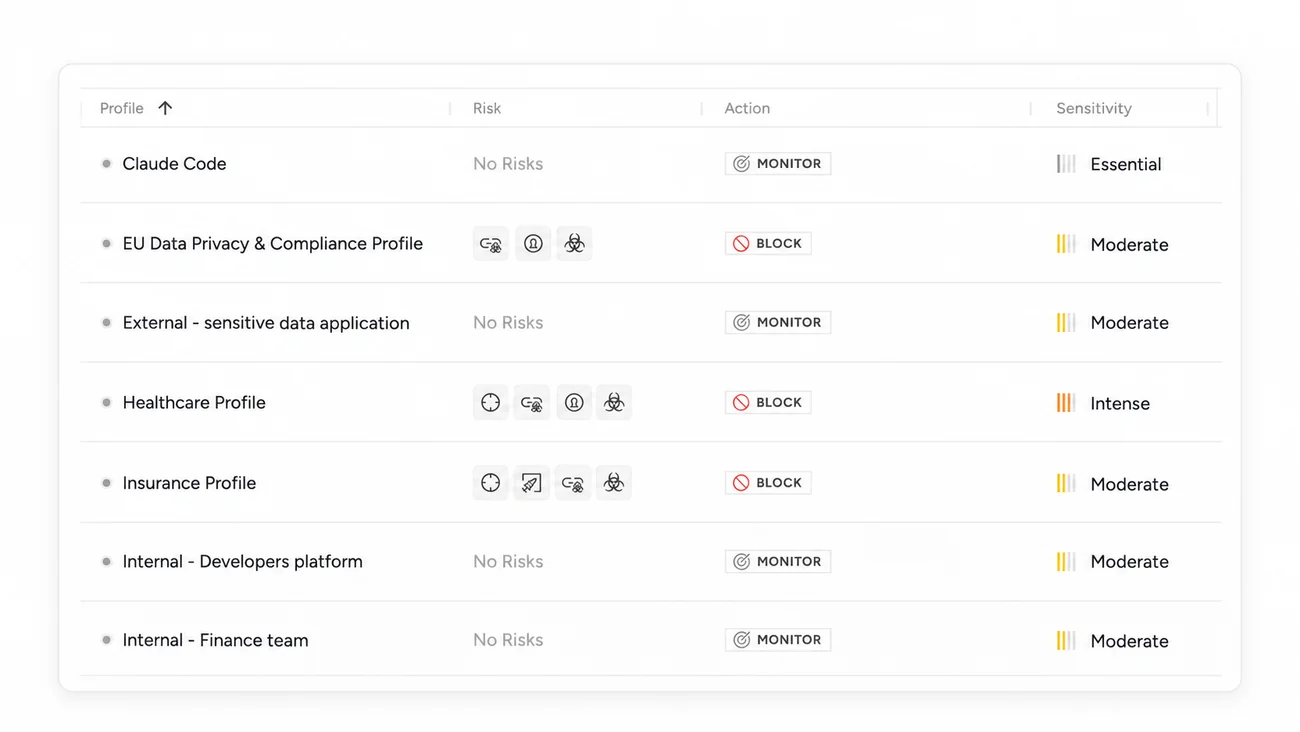
At runtime, Noma weighs each agent action against the full session, the user the agent acts for, the data it can reach, and its normal behavior. Depending on policy, it can stop destructive actions, steer the agent, alert a human, mask data, or trigger a kill switch. Its Open Enforcement model applies a single policy at the control points an organization already runs.
Key features include:
- Runtime behavior control (AI-DR): Detects and stops risky agent behavior in real time, including cases where individually legitimate actions combine into a dangerous sequence.
- Agent Access Control: Approves, reviews, or blocks agents, MCP servers, and skills, and scopes actions by user, team, or tool sensitivity.
- AI-SPM discovery: Finds every agent, MCP server, skill, and tool in the environment and surfaces related risk.
- Open Enforcement: Decouples policy from infrastructure, so governance is defined once and enforced at existing agent control points.
- Cross-environment coverage: Applies the same controls to endpoint AI agents, SaaS agents, and cloud agents.
- AI Red Teaming: Finds agent supply chain risks and misconfigurations and runs multi-turn attacks against AI applications.
Limitations (based on publicly available sources):
- Few public user reviews: Gartner Peer Insights lists no reviews yet for the platform, which makes independent validation harder.
- High listed contract price: An AWS Marketplace listing shows a 12-month contract for the platform at $200,000.
- Response behavior needs validation: Analyst summaries recommend confirming how blocking and masking behave for each specific LLM and agent stack.
Source: Noma Security
8. HiddenLayer AI Runtime Security

Best for: Detecting prompt injection and unsafe agent actions in production
Strengths: Agentic runtime visibility with Policy Packs and test mode
Things to consider: Needs SDK, proxy, or gateway instrumentation
HiddenLayer AI Runtime Security protects AI applications, agents, and agentic workflows with runtime visibility, threat detection, and inline enforcement. It addresses prompt injection and indirect attacks delivered through prompts, retrieved content, or tool output, as well as sensitive data exposure and unintended or unauthorized agent actions.
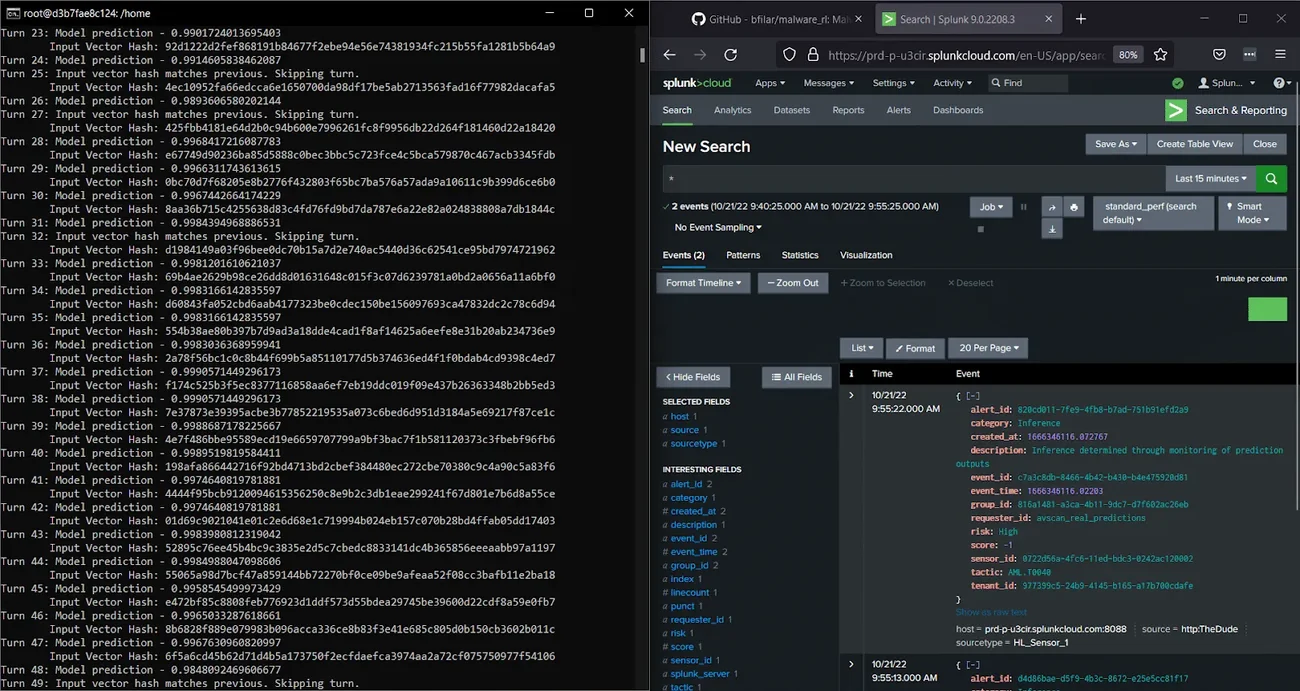
The module observes and reconstructs agent interactions across tools, data, and workflows, and it can detect, block, or redact unsafe actions and sensitive information according to policy. Runtime policies are built from a Rule Catalog and prebuilt Policy Packs, and their impact can be evaluated in test mode before enforcement is turned on.
Key features include:
- Agentic runtime visibility: Observes and reconstructs agent interactions across tools, data, and workflows in real time to support investigations.
- Agentic threat detection: Detects prompt injection, unsafe agent behavior, sensitive data exposure, malicious tool use, and other runtime threats.
- Inline protection: Detects, blocks, or redacts unsafe actions and sensitive information according to policy and the capabilities of the platform in use.
- Runtime policy management: Provides a Rule Catalog, built-in Policy Packs, and automated guidance for setting up runtime protections.
- Project Test Mode: Lets teams measure the impact of policies before enforcing them in production.
- Agent Harness Security: Extends runtime security to AI coding agents through a lightweight on-device integration.
Limitations (based on publicly available sources):
- Instrumentation required: Third-party comparisons note that the product needs SDK, proxy, or gateway instrumentation to inspect agent traffic.
- Enforcement depends on platform: Inline blocking and redaction are applied according to the capabilities of each integrated platform.
- Limited public reviews: End-user review volume across mainstream review platforms is low, which limits independent validation.
- Pricing not disclosed: HiddenLayer does not publish a starting price.
Source: HiddenLayer
Conclusion
Real-time enforcement of AI agent tool calls provides an essential layer of security for modern enterprise AI deployments. By moving beyond static permissions and prompt instructions to dynamic, context-aware guardrails, organizations can safely grant autonomy to intelligent agents. Implementing continuous authorization, credential isolation, and just-in-time access ensures that AI workflows remain aligned with policy and business intent.